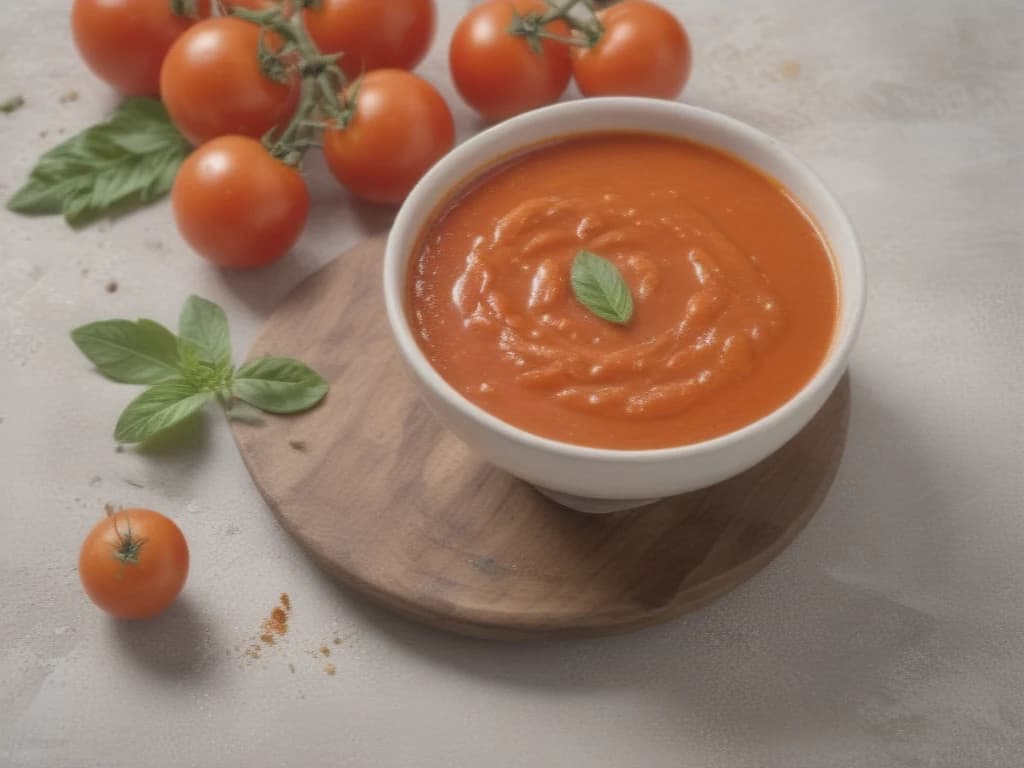
"The homemade tomato sauce uses scalded and peeled ripe tomatoes, cooked slowly with olive oil, onion, and garlic. Finished with fresh basil leaves, the sauce presents balanced acidity and rustic pieces to cover pasta or meats."
How to Make Homemade Tomato Sauce
O Que Você Precisa Saber
- Scalding the tomatoes in boiling water for 1 minute loosens the outer skin easily through thermal shock.
- The gentle cooking of 25 minutes reduces the water in the tomatoes, concentrating the sugars and natural glutamic acid.
- The fresh basil added at the end preserves the aromatic oils without burning in the hot pan.
Ingredients
Main Course
500g of ripe tomatoes
1 medium onion, chopped
2 cloves garlic, minced
2 tablespoons olive oil
1 teaspoon of sugar
Salt and pepper to taste
Fresh basil to taste
Instructions
Main Course
1
Heat the olive oil in a pan over medium heat.
2
Add the onion and garlic, sautéing until soft.
3
Meanwhile, blanch the tomatoes in hot water for 1 minute and remove the skin.
4
Facing the peeled tomatoes, cut them into cubes.
5
Add the tomatoes to the pot and mix well.
6
Add the sugar, salt, and pepper to taste.
7
Cook over low heat for about 20 to 25 minutes, stirring occasionally.
8
Finish by adding fresh basil and adjust seasoning, if necessary.
Equipe sua Cozinha
Encontramos os melhores utensílios e ingredientes para você preparar How to Make Homemade Tomato Sauce com perfeição.
Como Associado Amazon, o Receita Solta recebe por compras qualificadas feitas atraves deste link.
Chef Tips
- Faça um corte em cruz na base de cada tomate antes de escaldar para puxar a casca rapidamente sem desperdiçar polpa.
- Utilize tomates bem vermelhos e maduros, preferencialmente do tipo italiano ou débora, que possuem polpa carnuda e pouca água.
- Se o molho apresentar acidez pronunciada, cozinhe com meia cenoura inteira na panela em vez de adicionar mais açúcar.
Variations
- Add 1 pinch of dried red pepper flakes to the garlic sauté to give a spicy touch in the arrabbiata style.
- Incorporate 50 grams of chopped black olives and desalted capers to transform it into a classic puttanesca sauce.
- Blend the ready-made sauce in a blender or immersion blender if you prefer a perfectly smooth and velvety texture.
Substitutions
- O azeite de oliva extravirgem pode ser substituído por óleo de milho ou manteiga sem sal para dourar os temperos.
- O manjericão fresco pode ser substituído por orégano fresco picado ou 1 colher de chá de orégano desidratado.
- O açúcar cristal pode ser substituído por 1 colher de sopa de cenoura ralada finamente.
How to Store
Store the tomato sauce in a sterilized airtight glass jar in the refrigerator for up to 5 days. For better preservation, cover the surface of the sauce with a drizzle of olive oil before covering.
Can You Freeze It?
O molho de tomate caseiro congela perfeitamente em recipientes plásticos livres de BPA ou potes de vidro por até 3 meses. Para descongelar, passe para a geladeira na véspera ou aqueça diretamente na panela em fogo baixo.
What to Serve With
Ideal for serving over dry or fresh pasta such as spaghetti, penne, and tagliatelle cooked al dente. It also works perfectly as a base for homemade pizzas, meatballs, and eggplant parmigiana.
Frequently Asked Questions
Why put sugar in tomato sauce?
The teaspoon of sugar acts by chemically neutralizing the perception of acidity of less ripe tomatoes without sweetening the preparation.
Can I keep the tomato seeds in the sauce?
You can keep the seeds for a rustic preparation, but removing them leaves the sauce with a more refined flavor and lower acid load in the pot.
Is it possible to use canned peeled tomatoes instead of fresh tomatoes?
Yes, you can replace the 500g of fresh tomatoes with 1 can of whole peeled tomatoes, chopping coarsely before sautéing.
Why is the basil added only at the end of cooking?
Continuous heat degrades the volatile compounds of the basil and darkens the leaves; adding it at the end keeps the herbal aroma intact.
Prepare um nhoque de batata-doce roxa incrivelmente macio, combinado com um pesto de jambu e castanhas que vibra na boca. Uma explosão de cor e sabor para surpreender e encantar o paladar mais exigente.
Uma receita autêntica de pesto, ensinada por uma nonna genovesa. Feito com manjericão fresco, pinolis, alho, parmesão e azeite, este molho é um convite irresistível à mesa italiana. Prepare-se para uma explosão de frescor.
Prepare com antecedência esta vibrante salada de grãos, recheada com legumes crocantes e um vinagrete cítrico, que sempre conquista corações em potlucks e reuniões. Uma receita saudável e deliciosa que surpreende.