Japonesa
Por
Master Receita Solta
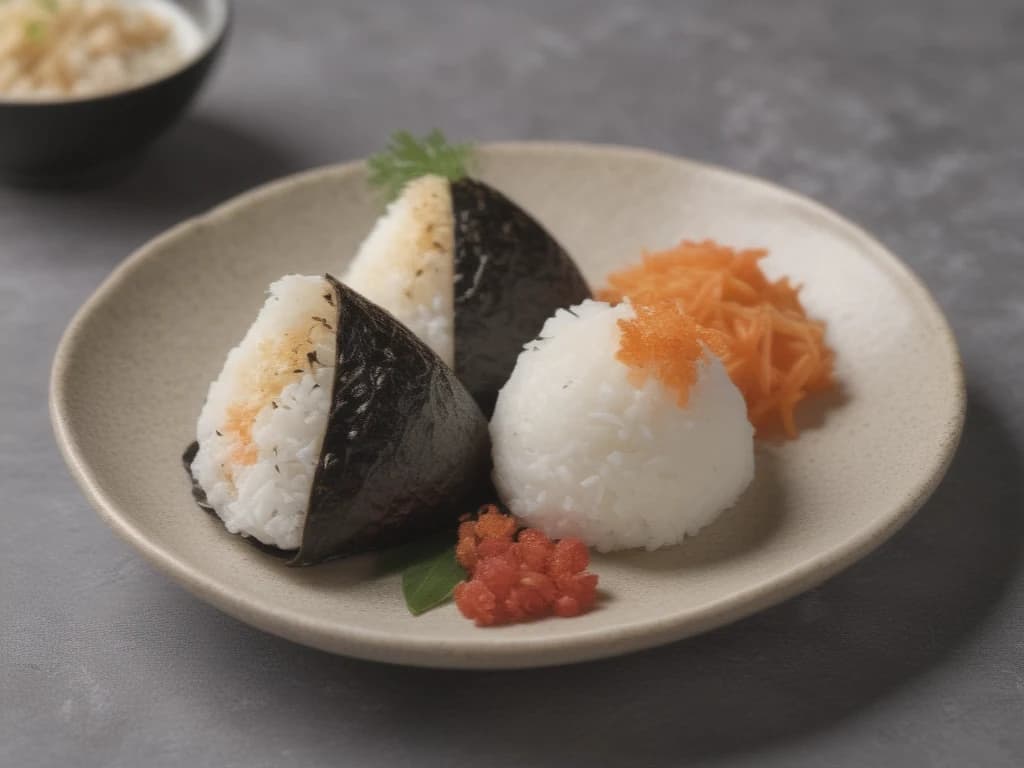
"Bolinho de arroz japonês tradicional moldado à mão em formato triangular, temperado com solução suave de vinagre de arroz, açúcar e sal. Recheado no centro com salmão grelhado desfiado e envolvido por tira crocante de alga nori na base, é o lanche mais emblemático da cultura nipônica."
- Washing the rice until the water runs clear removes the surface starch powder, allowing it to adhere without getting mushy. - The prior rest in water for thirty minutes ensures homogeneous cooking of each grain in the pot. - Moistening hands with salted water prevents the rice from sticking to fingers and gently seasons the shell.
Wash the Japanese rice under running water until the water runs clear.
Combine rinsed rice with 3 cups of water in a pot and let soak for 30 minutes.
Place over heat and, as soon as it starts to boil, reduce to low heat and cook for 15 minutes or until the water dries up.
Turn off the heat and let the rice rest for another 10 minutes, with the pot covered.
Meanwhile, mix the vinegar, sugar, and salt in a small bowl until dissolved.
After resting, place the rice in a large bowl and mix with the vinegar solution, letting it cool a little.
Moisten your hands with water and start shaping small portions of rice, placing the filling of your choice in the middle.
Form a ball and press lightly. If desired, use the mold to shape.
Envolva a parte inferior do Onigiri em uma tira de alga nori e sirva.
Encontramos os melhores utensílios e ingredientes para você preparar Discover the Flavor of Traditional Onigiri com perfeição.
Como Associado Amazon, o Receita Solta recebe por compras qualificadas feitas atraves deste link.
- Yaki Onigiri: pass the triangles in the skillet with soy sauce and butter until a crispy crust forms. - Seasoned Onigiri: wrap the rice in traditional furikake before shaping the triangular rice balls. - Mini Onigiris: make small rounded bites ideal for school bento lunch boxes.
- The salmon can be swapped for tuna paste with Japanese mayonnaise, umeboshi paste, or sautéed mushroom. - Rice vinegar can be replaced by apple cider vinegar with dissolved sugar and salt. - The nori seaweed can be replaced with a lightly toasted black and white sesame seed coating.
Consume preferably on the day of preparation. To store, wrap the triangles individually in plastic wrap without the seaweed and keep at a cool temperature for one day or in the refrigerator for two days; warm in steam to soften the rice.
Freeze the ready-made stuffed onigiris (without the nori seaweed) wrapped in plastic wrap for up to thirty days. To consume, thaw in the microwave at medium power for two minutes so the grain regains its original softness.
Harmonize with hot miso soup (misoshiru), bancha or sencha green tea, tsukemono pickled vegetables, and Japanese tamagoyaki omelet.
Not recommended; common long-grain rice does not have enough amylopectin to create the necessary binding to hold the shape.
The smothered rest with the pan covered finishes the cooking with the retained steam itself, leaving the grains perfectly hydrated.
Yes, the moisture of the rice softens the seaweed in a few minutes; therefore, add the dried nori only at the exact moment of eating.
Refrigeration crystallizes the rice starch; upon removing from the refrigerator, heat for thirty seconds in the microwave to restore softness.