
Pães
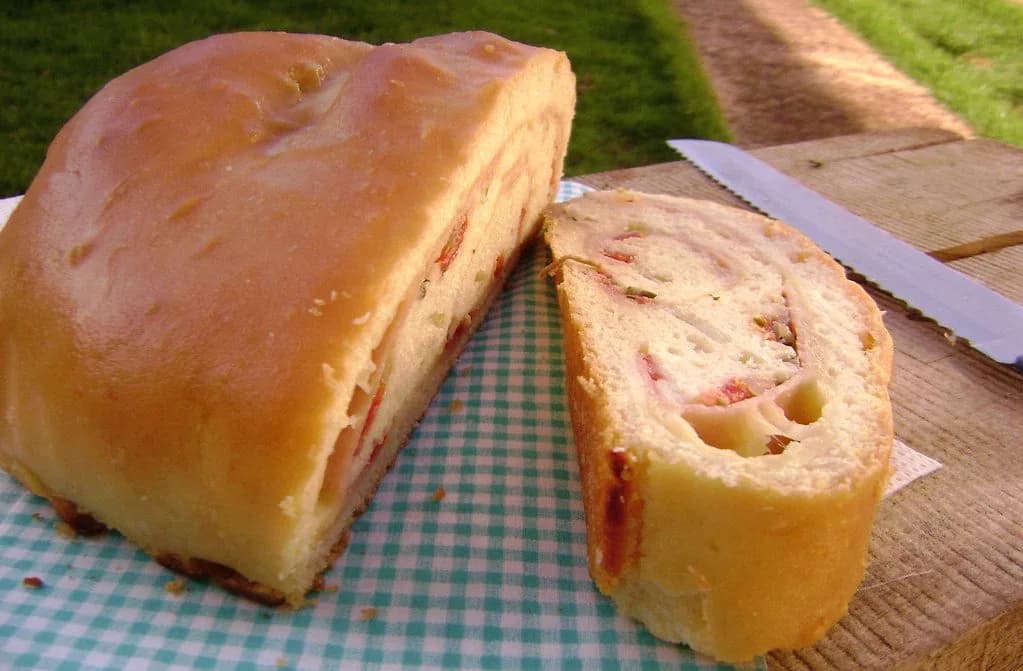
Pãozinhos Recheados com Queijo e Presunto - Receita Irresistível
Pãozinhos Recheados com Queijo e Presunto - Receita Irresistível
30 min
Por
Master Receita Solta

"Discover the unmatched flavor and texture of slow-fermentation bread, with an easy and rewarding preparation. Ideal for those looking for a tasty and texturally unique bread."
- Faz um pão com sabor e textura inigualáveis - Receita prática e rápida - Ingredientes comuns, mas resultam em um pão diferenciado
Em uma tigela grande, misture a farinha e o sal.
Add the sourdough starter and mix well.
Gradually add the warm water and mix with a wooden spoon until a homogeneous dough forms.
Transfer the dough to a floured surface and knead for approximately 10 minutes.
Place the dough back in the bowl, cover with a cloth, and let it rest for 1 hour.
Heat the oven to 230°C and leave a cast-iron pot inside to heat up.
After the first fermentation, shape the dough and place it in a pan or on a sheet of parchment paper.
Let the dough rest for another 30 minutes while the oven heats.
Carefully place the hot dough in the heated pot and cover.
Bake for 30 minutes, remove the lid, and bake for another 15 minutes until golden brown.
Remove from the oven and let cool on a rack before cutting.
Encontramos os melhores utensílios e ingredientes para você preparar Slow Fermentation Bread: Sabor e Textura Inigualáveis com perfeição.
Como Associado Amazon, o Receita Solta recebe por compras qualificadas feitas atraves deste link.
- Adicionar 50g de mel para dar um toque extra de sabor - Incluir 50g de nozes picadas para uma textura mais interessante - Substituir o fermento natural por fermento químico para resultados mais consistentes
- Substituir o fermento natural pelo fermento amassado para um sabor mais forte - Adicionar 50g de açúcar para dar mais sabor à massa - Substituir parte da farinha por farinha de trigo integral
Let the bread cool completely before slicing it to improve texture and durability. Lasts up to 2 days in the refrigerator.
- Não se pode congelar o pão - O pão pode ser congelado em uma embalagem hermética com um pouco de ar para permitir que o pão desamadure. - Descongele o pão em temperatura ambiente por cerca de 1 hora antes de servir.
- Suco de laranja para complementar o sabor - Nutella ou manteiga para recheio - Acompanhar com café ou chá
The natural yeast creates a crispier bread with a differentiated texture, different from common bread which is softer.
It should be left for approximately 30 minutes before being roasted.
Yes, you can, but the flavor will be different and the result will not be the same.
The bread cannot be frozen, but it can be frozen in an airtight container with a little air to prevent staling.
The bread lasts up to 2 days in a refrigerator, but it is best consumed faster.
Pãozinhos Recheados com Queijo e Presunto - Receita Irresistível