
Asiática
Tteokbokki: O Sabor Picante que Vai Te Conquistar
Tteokbokki: O Sabor Picante que Vai Te Conquistar
30 min
Por
Master Receita Solta
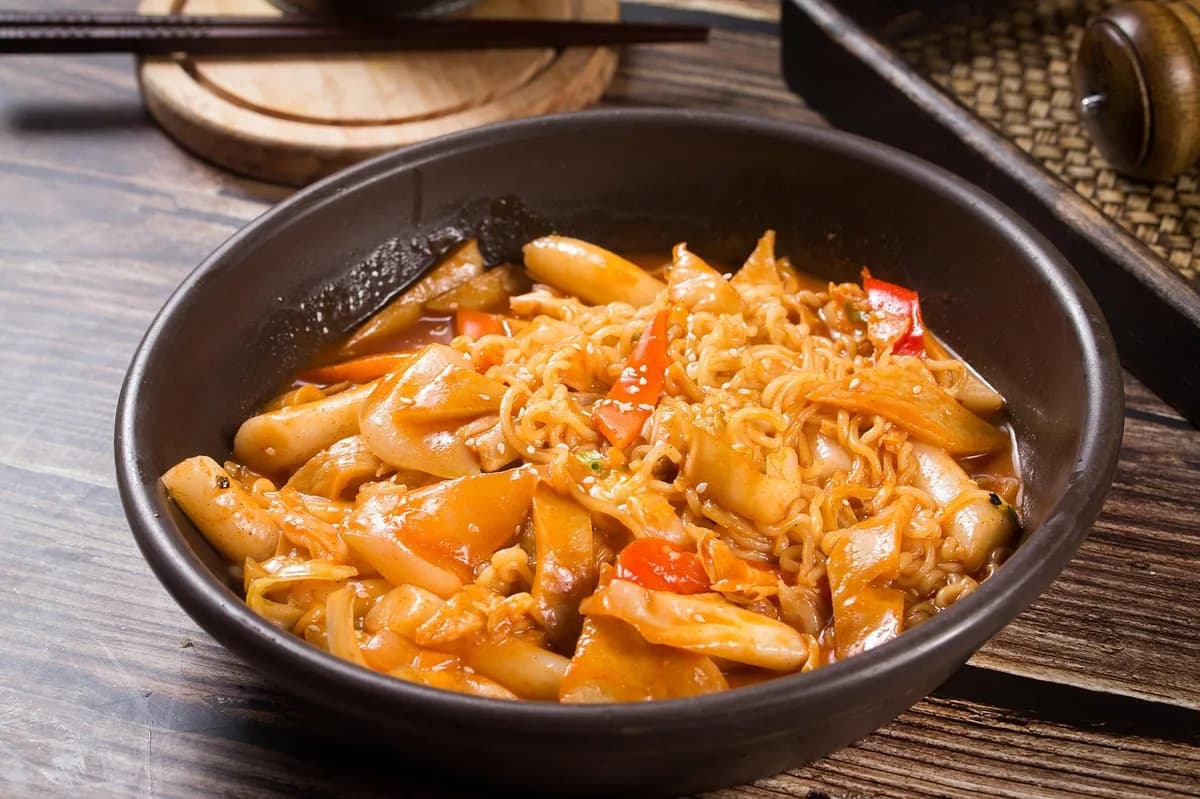
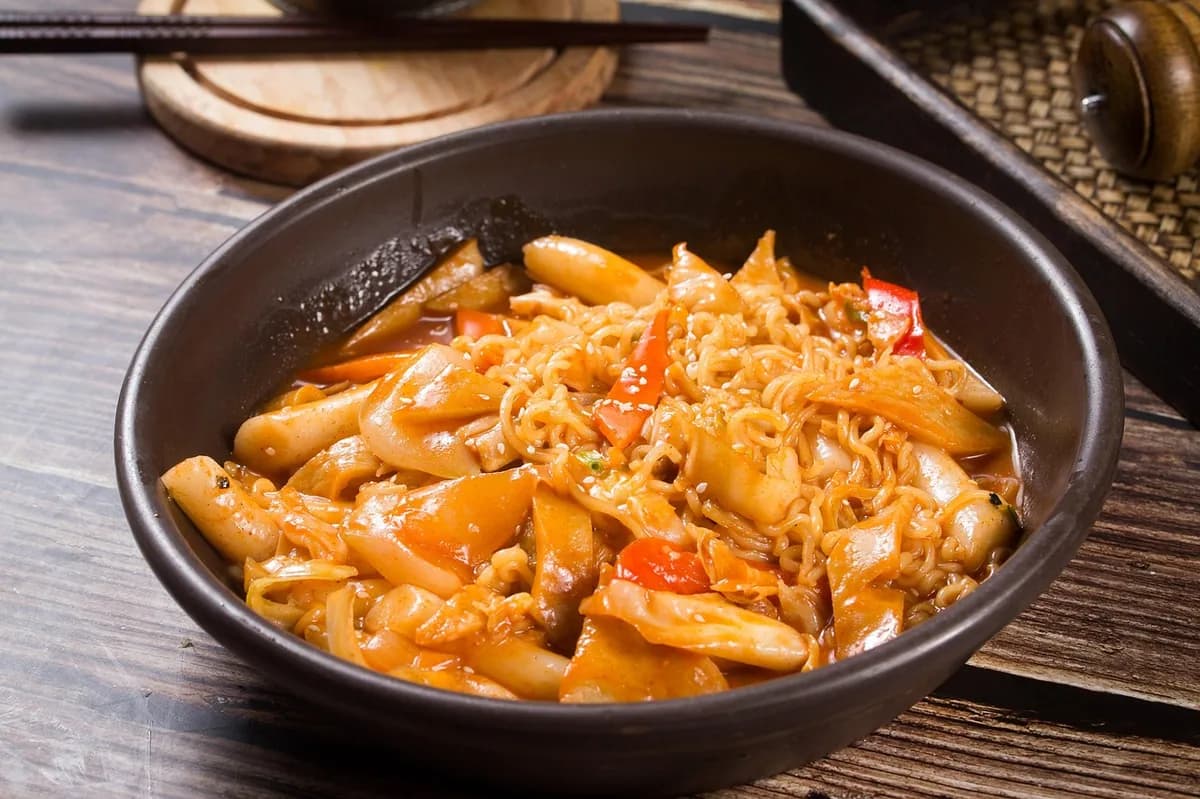
"Iconic street food dish from South Korea composed of chewy cylindrical rice cakes (tteok) cooked in a dense and velvety chicken broth with fermented gochujang paste, soy sauce, sugar, and onion. Finished with chopped green onions and crispy toasted sesame seeds."
- The elastic and chewy consistency of the rice dough (tteok) is the characteristic sensory mark of Korean cuisine. - The combination of gochujang, soy sauce, and sugar in the reduced broth produces a shiny and full-bodied bittersweet sauce. - Gentle simmering for fifteen minutes releases the starch that thickens the liquid without breaking the cylindrical shape.
Start by boiling the chicken broth in a large pot.
Add the chopped onion and cook until translucent.
Incorporate the gochujang paste and soy sauce, mixing well.
Add the rice balls and cook for 10 minutes over medium heat.
Add the sugar, stir, and let cook for another 5 minutes, until the sauce thickens.
Finish with chopped chives and sesame seeds on top.
Serve warm and enjoy.
Encontramos os melhores utensílios e ingredientes para você preparar Tteokbokki: The Tasty Korean Snack You Will Love com perfeição.
Como Associado Amazon, o Receita Solta recebe por compras qualificadas feitas atraves deste link.
- Rabokki: add instant ramyeon-type noodles and boiled eggs to the bubbling broth in the pot. - Version with Cheese: top the hot dumplings with shredded mozzarella cheese and cover until melted. - Addition of Fish Paste: incorporate triangular slices of eomuk (pressed fish cake) along with the onion.
- Os bolinhos cilíndricos de arroz podem ser trocados por fatias ovais de tteok tradicionais para sopa. - O caldo de galinha pode ser substituído por caldo de algas kombu e anchovas desidratadas ou caldo de legumes. - O açúcar branco pode ser trocado por xarope de milho coreano (mulyeot) para conferir brilho espelhado.
Store leftovers in an airtight container in the refrigerator for up to three days. Upon cooling, the rice starch hardens the fritters; reheat in a pan with four tablespoons of water over low heat, stirring until they soften and the sauce regains its shine.
It is not recommended to freeze ready-made tteokbokki with the sauce, as the rice cake cracks and becomes spongy and crumbly upon thawing. Freeze only the raw rice balls vacuum-packed for up to three months.
Harmonize with fried seaweed rolls stuffed with potato noodles (kimmari), fried mandu dumplings, yellow radish pickles, and iced tea.
It should present a very chewy, soft, elastic, and flexible consistency, without a hard core or soggy or falling apart appearance.
They are sold in Asian neighborhoods (such as Bom Retiro and Liberdade in São Paulo) and online Korean product stores.
Reduza a quantidade de pasta gochujang pela metade, compense com um pouco mais de caldo e acrescente queijo muçarela derretido por cima.
Rice dough undergoes starch retrogradation at mild temperatures; when reheating with a little water, the starch softens again.
Tteokbokki: O Sabor Picante que Vai Te Conquistar
Frango Xadrez: Sabor e Tradição em um Prato Delicioso