- Prep
- 20 min
- Cook
- 30 min
- Total time
- 50 min
- Yield
- 4 servings
- Difficulty
- EASY
- Calories
- 465 kcal
Quick summary
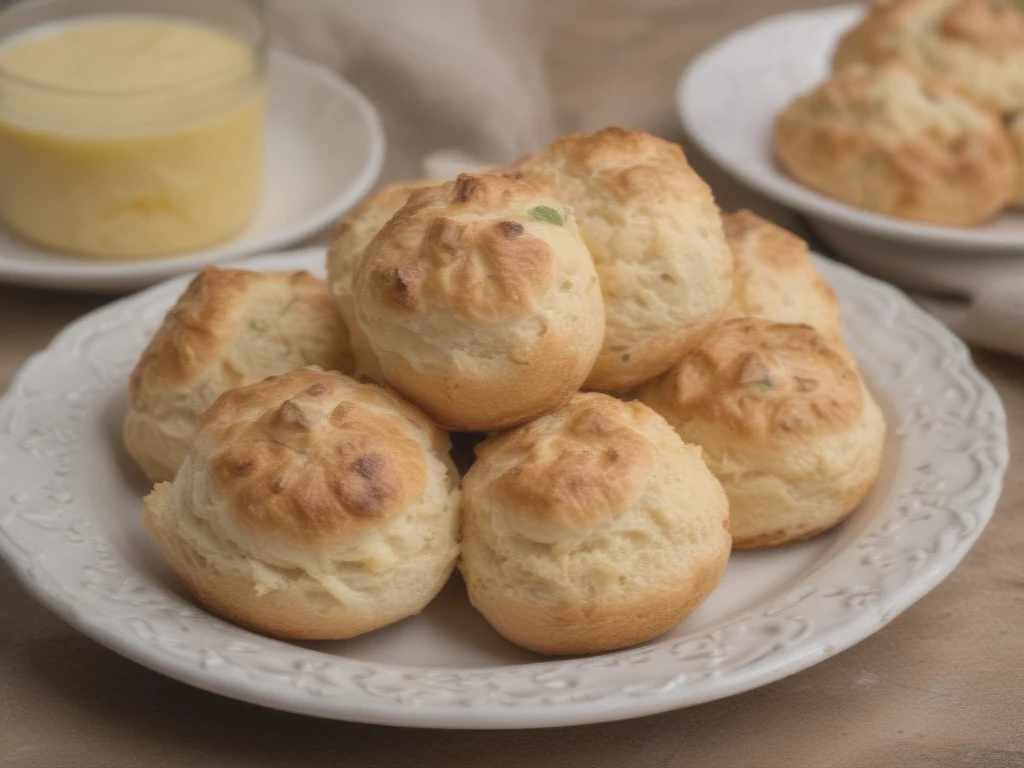
“Traditional cheese scones are quick breads of British origin, adapted with the rusticity and aromatic intensity of grated cured minas cheese. The preparation dispenses with long yeast fermentation, relying on the quick action of chemical baking powder under intense heat. Cold butter is worked into the flour only with the fingertips until a coarse farofa texture is obtained. After brief hydration with milk, the discs cut 2 cm thick grow vertically at 200°C, revealing a flaky, soft crumb and a crust golden from the beaten egg.”
What you need to know
- Cut the cold butter into cubes and incorporate into the flour just until it forms a crumbly mixture with visible pieces of fat.
- Mix the milk gradually without overkneading to preserve the internal air and avoid developing gluten in the dough.
- Cut the discs with a sharp 6 cm cutter pressing straight down without rotating to allow straight growth in the oven.
Ingredients
Main
- 2 cups all-purpose flour
- 1 tablespoon baking powder
- 1/2 teaspoon salt
- 1/4 cup of cold butter, cut into cubes
- 1 cup grated cured Minas cheese
- 3/4 cup of milk
- 1 beaten egg (for brushing)
Instructions
Principal
- Preheat the oven to 200°C and grease a baking sheet.
- In a bowl, mix the flour, baking powder, and salt.
- Add the butter and mix with your fingertips until you get a farofa.
- Incorporate the grated cheese into the mixture.
- Add the milk gradually, mixing until a homogeneous batter forms.
- On a floured surface, knead the dough lightly for 1-2 minutes.
- Roll out the dough to 2 cm thickness and cut into small circles.
- Place the scones on the baking sheet and brush with the beaten egg.
- Bake for 15-20 minutes or until golden brown.
- Remove from the oven and let cool slightly before serving.
Chef's tips
- Keep the butter and milk under strict refrigeration until the exact minute of starting the mixture in the bowl.
- Brush the beaten egg only on top of the scone, avoiding it dripping down the sides and sticking the puff pastry layers together.
- Bake in a preheated oven at 200°C with the scones close together (about 1 cm between them) to force vertical growth.
Variations
- Scones with fine herbs: add 1 tablespoon of chopped fresh rosemary or chopped green onions to the dry flour.
- Scones with toasted bacon: mix half a cup of fried and well-dried bacon cubes together with the grated cheese.
- Scones with black pepper: add freshly ground black pepper and a pinch of grated nutmeg to the dough.
Substitutions
- Aged minas cheese can be substituted with half-cured canastra cheese, finely grated parmesan cheese, or English cheddar cheese.
- Whole milk can be swapped for milk curdled with a few drops of lemon (homemade buttermilk) to increase acidity.
- The unsalted butter can be replaced with chilled pork lard for an even more crumbly finish.
How to store
Store in a closed container at room temperature for up to 2 days. Reheat in a preheated oven at 180°C for 5 minutes to restore the crispy crust and the aroma of the cheese.
Can it be frozen?
Freeze the raw scones already cut on a baking sheet for 2 hours at -18°C and store in sealed bags for up to 90 days. Bake directly frozen at 200°C adding 3 to 5 minutes to the oven time.
What to serve with
Serve warm, split in half with fresh salted butter melting in the crumb, artisanal pepper jelly, or slices of prosciutto and drip coffee.
Frequently asked questions
Why shouldn't scones be kneaded like bread dough?
Kneading activates the gluten networks of the wheat flour, making the scone heavy, hard, and chewy. The dough should only be aggregated with your hands until it forms a cohesive block.
Can I brush butter on top instead of beaten egg?
Yes, however, the egg gives a satin shine and vivid golden color. Melted butter provides a more rustic and matte finish, with an accentuated milky flavor.
Why shouldn't you rotate the dough cutter when cutting the circles?
Rotating the cutter seals the cut sides of the dough, gluing the layers of flour and butter and preventing the scone from rising vertically evenly in the oven.
What is the importance of the butter being very cold?
Pieces of cold butter dispersed in the flour evaporate in the heat of the oven, creating steam pockets that separate the dough layers, generating the typical flaky and airy texture.