- Prep
- 45 min
- Cook
- 30 min
- Total time
- 75 min
- Yield
- 4 servings
- Difficulty
- Medium
- Calories
- 410 kcal
Quick summary
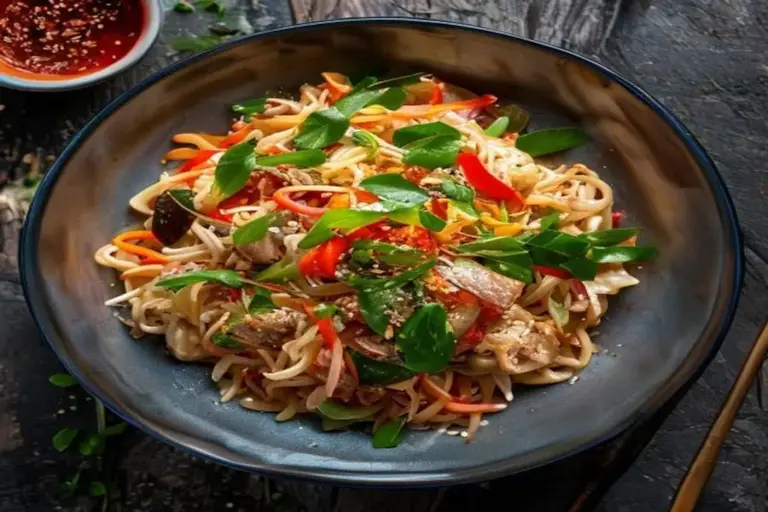
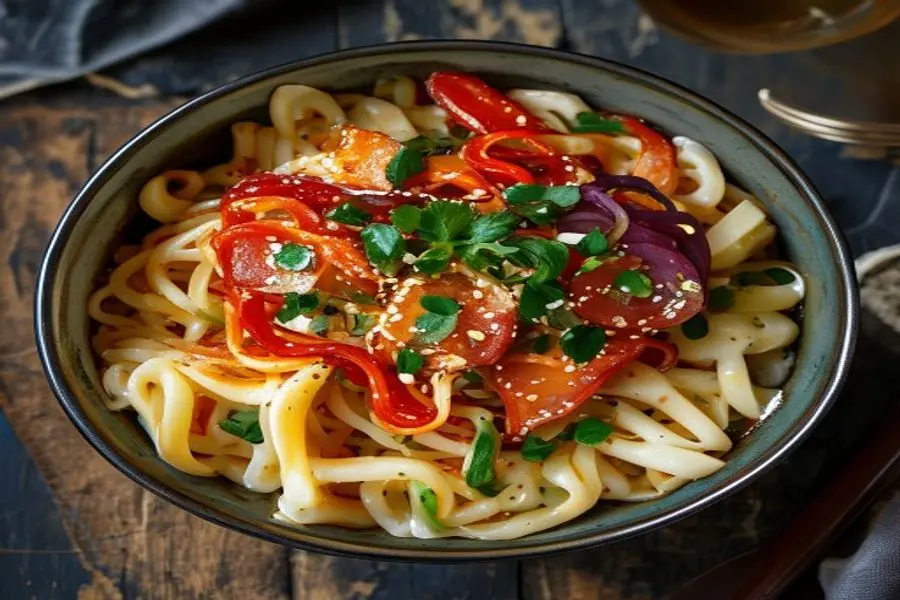
“This Korean dish combines artisanal noodles made from mashed fresh tofu and flour with a velvety, spicy sauce of fermented kimchi, gochujang paste, and vegetable cream. A comforting preparation rich in vegetable proteins and umami.”
What you need to know
- Firm tofu, well-pressed, replaces part of the liquids in the dough, adding elastic softness and pure protein to the artisanal noodles.
- The 30-minute rest under a damp cloth relaxes the gluten chains of the flour, facilitating the rolling and cutting of the pasta strands.
- Cooking kimchi with gochujang and tomato paste deepens the fermented notes before adding the velvety vegetable cream.
Ingredients
Main
- g Extra-firm tofu pressed of all water
- cups (approx. 240g) All-purpose flour
- cup (120ml) + 2-3 tablespoons Water
- teaspoon Salt
- tablespoons Vegetable oil
- unidade, picada Cebola pequena
- cloves, minced Garlic
- cup (approx. 150g), chopped Vegan kimchi
- tablespoon Tomato paste
- tablespoons (to taste) Gochujang (Korean chili paste)
- tablespoons Soy sauce (shoyu)
- teaspoon Sugar (or agave syrup)
- cup (120ml) Vegetable broth
- xícara (240ml) Vegetable cream for cooking (or coconut milk)
- taste, chopped Green onions
- taste Toasted sesame seeds
- Chili flakes (gochugaru)
- a drizzle Toasted sesame oil
Instructions
Principal
- Start by mashing the firm tofu, extracted of all water, until you get a homogeneous paste. To ensure the perfect texture, it is crucial to remove as much moisture as possible from the tofu. The professional technique is: press the tofu for at least 30 minutes, ideally with weights.
- In a large bowl, combine the wheat flour, salt, mashed tofu, and water. Mix until a sticky dough forms. The secret to this recipe is: do not add extra flour immediately, as the dough will firm up while resting and kneading.
- Transfer the dough to a floured surface and knead for 8-10 minutes, until elastic and smooth. Cover the dough with a damp cloth or plastic wrap and let rest for 30 minutes at room temperature. This step is vital for developing the gluten.
- While the dough rests, sauté the chopped onion and garlic in vegetable oil in a pot. Cook over medium heat until the onion is translucent and the garlic is aromatic. The short answer is: brown well to enhance the flavors.
- Add the chopped kimchi to the stir-fry and cook for another 3-5 minutes, stirring occasionally. Make sure the kimchi starts to release its complex aromas and flavors, a fundamental step for a rich and deep sauce. In simple terms: let it lightly caramelize.
- Add the tomato paste, gochujang, soy sauce, and sugar to the sautéed mixture. Cook for 2-3 minutes, stirring constantly, allowing the aromas to deepen and the ingredients to meld. This step builds the umami base and flavor profile of the sauce.
- Pour the vegetable broth and plant-based cream into the pan, mixing all the ingredients well. Let the mixture come to a gentle boil, then reduce the heat and cook for 5-7 minutes until the sauce thickens slightly. Adjust seasonings, if necessary, for a perfect balance.
- Divide the noodle dough into four portions. Roll each portion on a lightly floured surface to about 2-3 mm thick. With kitchen shears, cut the dough into strips or irregular shapes about 2-3 cm long.
- Bring a large pot of salted water to a boil. Cook the noodles in small batches for 2-3 minutes, or until they float and are al dente. Remove with a slotted spoon and drain, reserving some of the cooking water. O erro mais comum é: cooking all the noodles at once, which can cause them to clump together and compromise the texture.
- Add the cooked noodles to the creamy kimchi sauce in the pan, tossing gently to coat each piece in the flavorful sauce. If the sauce is too thick, add a little of the noodle cooking water to reach the desired consistency.
- Serve immediately, garnishing with chopped scallions, toasted sesame seeds, and chili flakes, if you desire an extra touch. A drizzle of toasted sesame oil can add an irresistible final aroma and deepen the gastronomic experience. Enjoy this fusion of flavors!
Chef's tips
- Press the firm tofu wrapped in paper towels under a heavy weight for 15 minutes to remove as much residual watery liquid as possible.
- Cook the fresh artisanal noodles in abundant salted water for about 3 to 4 minutes until they rise to the surface of the pot.
- Mix the velvety kimchi sauce into the noodles immediately after draining so the starch of the strands absorbs the fragrant broth.
Variations
- Sautéed mushrooms: add sliced shiitake or shimeji mushrooms to the kimchi stir-fry for extra meaty texture.
- Touch of black sesame: sprinkle toasted black sesame seeds and toasted sesame oil generously before serving.
- Extra spicy version: add half a tablespoon of gochugaru flakes directly into the sauce during the initial sauté.
Substitutions
- The gochujang paste can be substituted with miso paste combined with red pepper flakes (gochugaru) and a touch of vinegar.
- The plant-based cooking cream can be swapped for full-fat culinary coconut milk or homemade blended cashew cream.
- All-purpose flour can be substituted with type 00 flour to ensure greater elasticity in the pasta strands.
How to store
Store leftover noodles with the sauce in a sealed jar in the refrigerator for up to 3 days. When reheating in the pan over low heat, add 2 tablespoons of vegetable broth or warm water to loosen the strands and recover the creaminess of the sauce.
Can it be frozen?
The raw and cut artisanal noodles can be floured, shaped into nests, and frozen raw in the open for up to 60 days. Cook the noodles directly from frozen in boiling salted water for 5 minutes. Do not freeze the sauce with ready-made vegetable cream.
What to serve with
Classic side dish for Korean banchan-style pickles, sweet and sour cucumber marinated with rice vinegar, or toasted nori seaweed rolls. To drink, pair with a cold light craft beer, roasted barley tea (boricha), or sparkling water.
Frequently asked questions
Does the kimchi need to be vegan for this recipe?
The recipe suggests vegan kimchi (without fish sauce or fermented shrimp) for those following a plant-based diet, but traditional kimchi works perfectly.
Why add tofu to the homemade pasta dough?
Tofu adds protein, reduces the density of refined carbohydrates, and provides a velvety texture and elastic chewiness to the noodles.
How to prevent artisanal noodles from sticking after cutting?
Sprinkle wheat flour generously over the cut strands and shake them lightly on the counter before placing in the boiling salted water.
What is gochujang paste and what flavor does it give the dish?
It is a traditional Korean paste made from fermented red chili peppers with glutinous rice and soybeans, providing a spicy, sweet, and umami-dense flavor.