
Carnes
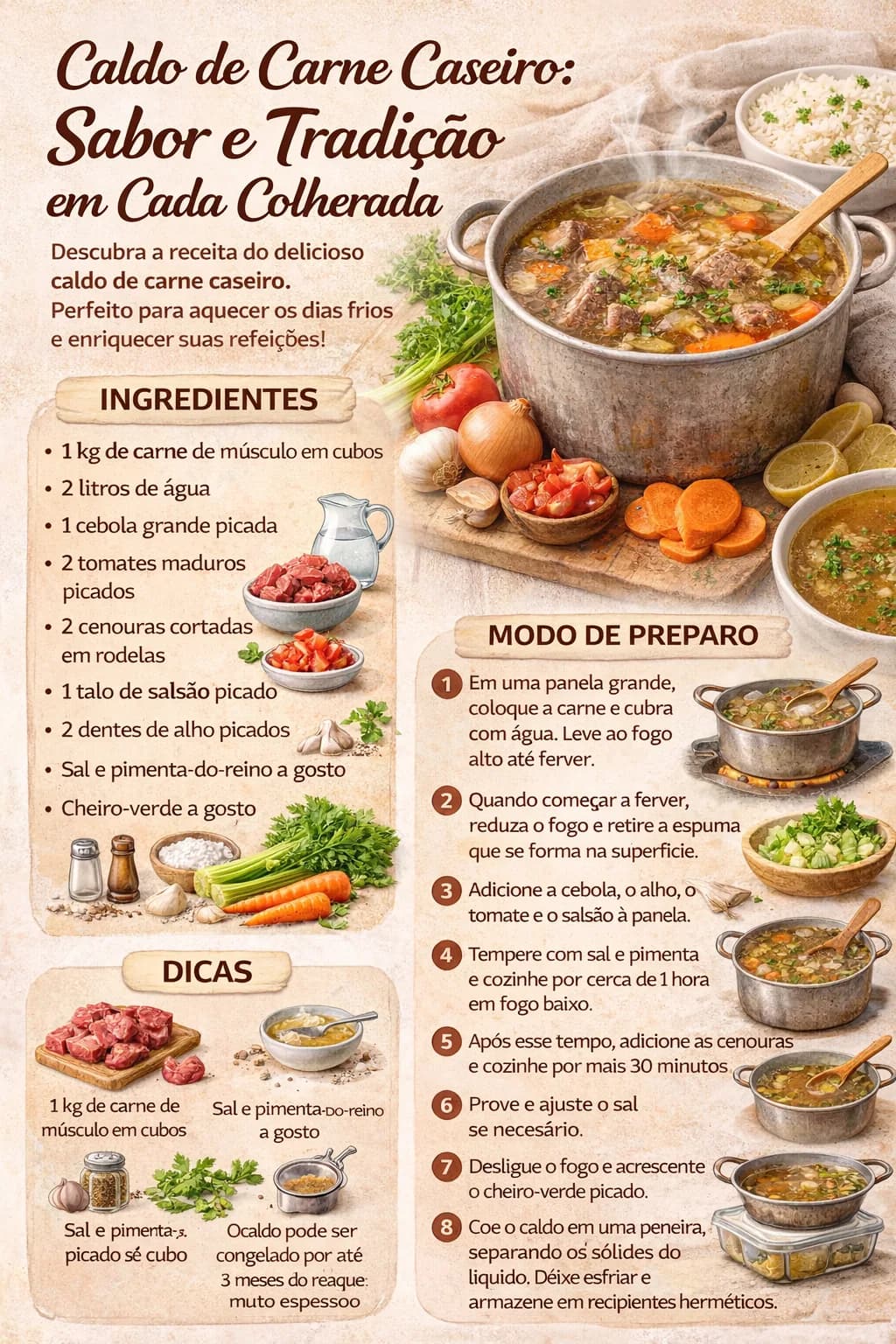
Caldo de Carne Caseiro: Sabor e Tradição em Cada Colherada
Caldo de Carne Caseiro: Sabor e Tradição em Cada Colherada
30 min
Por
Master Receita Solta
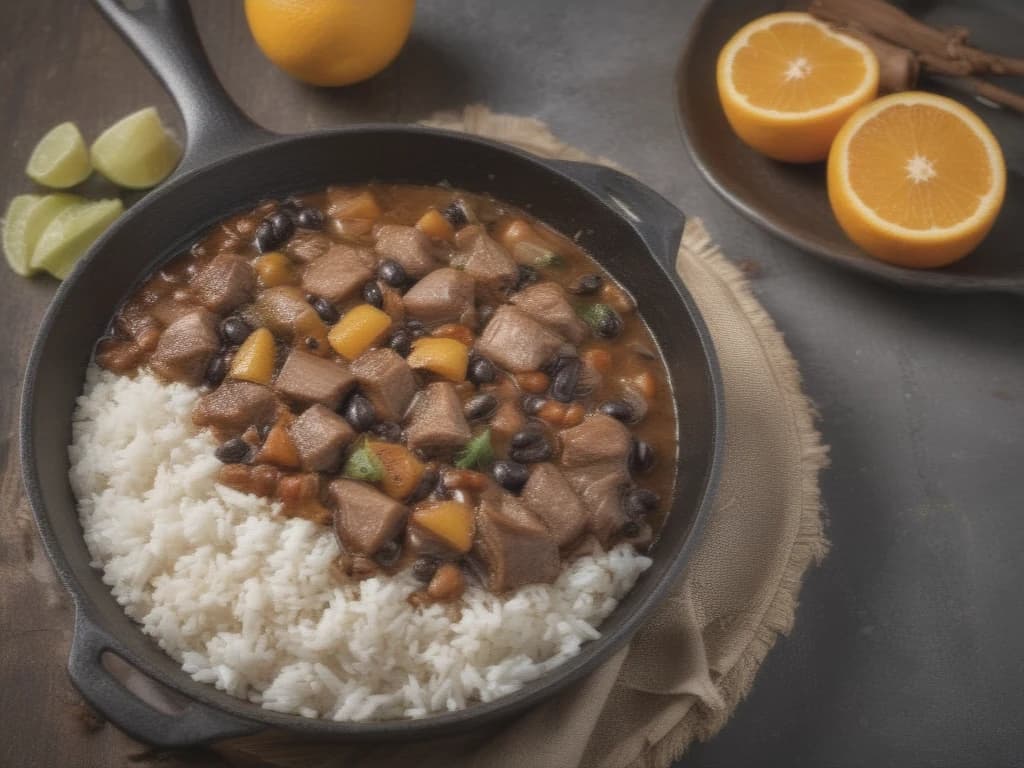
"Feijoada traditional prepared with black beans, dried meat, pork ribs, and calabresa sausage, pressure-cooked with bay leaves, sautéed garlic, and onion. A substantial and emblematic dish of the Brazilian table, perfect for family Saturday lunches."
- A hidratação de 8 horas do feijão preto agiliza o cozimento na pressão e torna os grãos mais digeríveis - O refogado inicial doura a costelinha e solta a gordura temperada da calabresa para aromatizar o caldo - O cozimento sob pressão por 1 hora garante carnes macias desmanchando e feijão macio em caldo espesso
Comece deixando o feijão de molho por 8 horas para que cozinhe melhor.
In a pressure cooker, brown the onion and garlic in a little oil.
Add the dried meat and the pork ribs, sautéing for a few minutes.
Add the calabresa sausage and continue sautéing.
Drain the beans and add to the pot with the meats.
Cover everything with water, add the bay leaves, salt, and black pepper.
Cover the pan and cook for about 1 hour after the pressure starts.
Turn off the heat and let the pressure release naturally.
Check the seasoning, adjusting the salt if necessary before serving.
Serve hot, accompanied by rice and farofa.
Encontramos os melhores utensílios e ingredientes para você preparar Traditional Feijoada Recipe: The Flavor of Brazil on Your Table com perfeição.
Como Associado Amazon, o Receita Solta recebe por compras qualificadas feitas atraves deste link.
- Adicione 1 laranja inteira com casca lavada cortada ao meio na panela de pressão para suavizar a gordura - Refogue 1 maço de couve-manteiga fatiada fina no alho para incorporar à feijoada ou servir como guarnição - Adicione 1 colher de sopa de cachaça branca ao refogado inicial para conferir toque aromático tradicional
- A costelinha suína fresca pode ser substituída por lombo salgado dessalgado ou paio defumado em rodelas - A linguiça calabresa pode ser trocada por paio ou linguiça portuguesa defumada na mesma quantidade - A carne seca pode ser substituída por charque bovino dessalgado ou carne de sol cortada em cubos
Store the cooled Feijoada in a closed container in the refrigerator for up to 4 days. The broth is even tastier the next day as the seasonings concentrate in the black beans.
Pode ser congelada em potes herméticos para freezer por até 3 meses. Descongele na geladeira durante a noite e aqueça em fogo médio, adicionando um pouco de água se o caldo estiver muito denso.
Serve with fluffy white rice, cassava farofa in butter, collard greens sautéed in garlic, fresh orange slices, and chili pepper sauce.
Sim, a dessalga prévia em água fria ou uma fervura rápida de 15 minutos é indispensável para remover o sal de cura e evitar que a feijoada fique intragável.
Let the pan boil uncovered over medium heat for 10 to 15 minutes, stirring occasionally, and mash some cooked grains to give viscosity to the sauce.
It can be prepared in a covered heavy-bottomed cauldron over low heat, requiring between 2 and a half and 3 hours of cooking with periodic replenishment of hot water.
Natural depressurization preserves the liquids inside the meat fibers and prevents the bean grains from bursting due to the sudden impact of steam.
Caldo de Carne Caseiro: Sabor e Tradição em Cada Colherada

Esta receita transforma ervilhas congeladas em saborosos bolinhos crocantes, perfeitos para um almoço leve ou jantar criativo. O 'bacon' vegano complementa com sua textura defumada, criando uma experiência gastronômica completa e acessível. Surpreenda-se com este prato vibrante e delicioso!

Polpette: Receita Italiana Autêntica de Almôndegas Caseiras