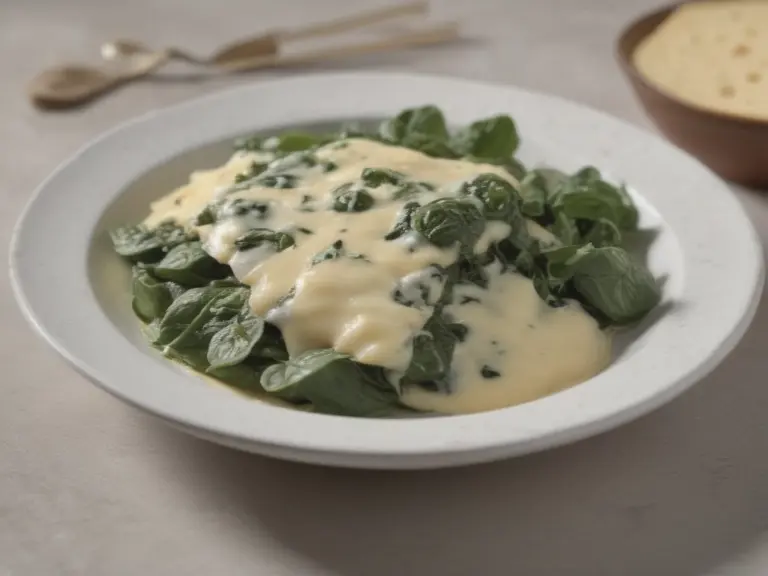
- Prep
- 20 min
- Cook
- 30 min
- Total time
- 50 min
- Yield
- 4 servings
- Difficulty
- EASY
- Calories
- 450 kcal
Quick summary
“The cheese soufflé combines a thick base of béchamel sauce prepared with butter, flour, and milk with incorporated eggs and grated parmesan cheese. When baking at 180°C for 35 minutes, the mixture grows significantly in the pan, resulting in an aerated and golden texture.”
What you need to know
- The classic butter and flour roux cooked for 2 minutes eliminates the raw starch flavor before adding the warm milk.
- The gradual incorporation of eggs off the heat prevents premature coagulation and ensures the emulsion of the dough.
- Grated parmesan cheese melts homogeneously into the bechamel, ensuring concentrated flavor and balanced salinity.
Ingredients
Main
- 3 tablespoons of butter
- 3 tablespoons of all-purpose flour
- 2 cups of milk
- 4 eggs
- 200g of grated parmesan cheese
- Salt and black pepper to taste
Instructions
Principal
- In a saucepan, melt the butter over medium heat and add the flour, stirring constantly.
- Slowly add the milk, continuing to stir until you get a thick bechamel sauce.
- Remove from heat and add the eggs one by one, mixing well.
- Add the parmesan cheese, salt, and pepper and mix until incorporated.
- Pour the mixture into the greased soufflé dish and place in the oven.
- Bake for about 35 minutes or until the soufflé is golden and risen.
- Remove from the oven and serve immediately to enjoy its lightness.
Chef's tips
- Add the milk slowly and stir without stopping with a wire whisk (fouet) to obtain a velvety bechamel without lumps.
- Grease the soufflé dish with butter and make upward movements with the brush to help the soufflé rise straight.
- Do not open the oven door before 25 minutes of cooking so that the hot air does not escape and make the soufflé deflate.
Variations
- Add 1 pinch of freshly grated nutmeg to the béchamel base to give the traditional French aroma.
- Sprinkle extra parmesan cheese on the sides and bottom of the greased pan before adding the batter to create a tasty crust.
- Add 2 tablespoons of chopped chives or herbs de Provence to the dough for a rustic touch.
Substitutions
- Parmesan cheese can be replaced by grated gruyère cheese, emmental cheese, or cured prato cheese in the same amount.
- Wheat flour can be replaced by cornstarch dissolved in milk for a lighter preparation.
- The butter can be replaced by clarified butter or unsalted culinary margarine.
How to store
The cheese soufflé should be served immediately after coming out of the oven, as the trapped air contracts quickly when cooling. Refrigerated leftovers lose aeration, but last up to 2 days for reheated consumption.
Can it be frozen?
Freezing the ready-made juice is not indicated, as the airy structure and white sauce destabilize upon thawing. It is recommended to bake and consume the recipe fresh at the time of the meal.
What to serve with
Serve accompanied by a classic green salad dressed with mustard vinaigrette and crusty French bread or thin toast. Pairs well with dry white wine or chilled brut sparkling wine.
Frequently asked questions
Why does the cheese soufflé deflate so quickly after leaving the oven?
The soufflé rises due to the expansion of hot air and water vapor trapped in the dough; upon contact with the cold ambient air, the steam condenses and the dough sinks.
Is it necessary to beat the egg whites separately?
In the provided recipe, the eggs are added whole one by one to the bechamel sauce; beating the egg whites into stiff peaks would increase the volume, but the direct method is more stable.
What to do to make the souffle rise evenly?
Clean the top edge of the pan with your fingertip after pouring the batter to remove residue that prevents the soufflé from rising freely.
What is the most recommended pan for baking the soufflé?
Refractory ceramic molds with straight walls (ramekins or soufflé-type dishes) are ideal for guiding the uniform vertical growth of the dough.
You might also like