- Prep
- 20 min
- Cook
- 30 min
- Total time
- 50 min
- Yield
- 4 servings
- Difficulty
- EASY
- Calories
- 510 kcal
Quick summary
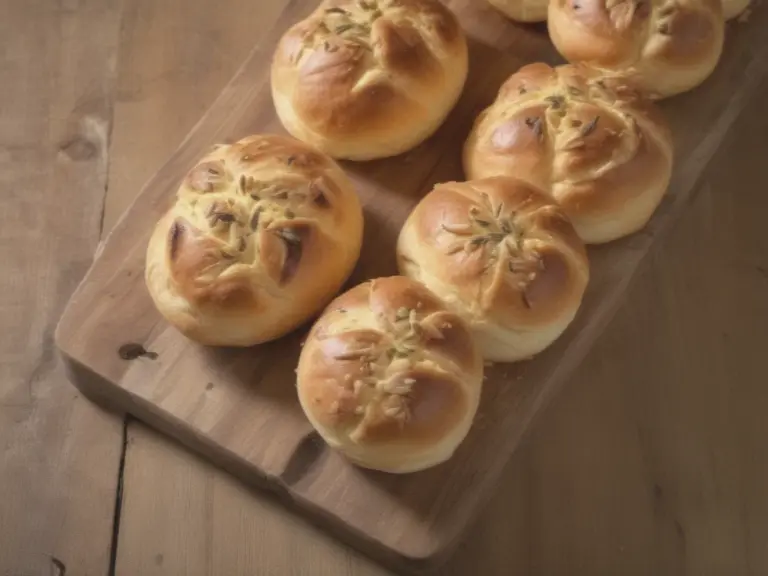
“This artisanal French croissant recipe uses laminated leavened dough with cold butter in successive folds. Baked at 200°C, they result in golden puff pastries with open alveoli and a buttery flavor.”
What you need to know
- The cold temperature of the butter and water prevents the fat from melting into the dough during the lamination steps.
- The 30-minute rests in the refrigerator between folds relax the gluten allowing the dough to be opened without tearing.
- The final 1-hour rise before the oven at 200°C aerates the layers, creating a flaky crumb and air pockets.
Ingredients
Main
- 500g all-purpose flour
- 10g of salt
- 50g of sugar
- 10g of dry yeast
- 300ml of cold water
- 300g of unsalted butter, cold
Instructions
Principal
- In a bowl, mix the wheat flour, salt, sugar, and yeast.
- Add the cold water gradually, mixing until a homogeneous dough forms.
- Knead the dough for about 10 minutes until smooth and elastic. Let it rest for 1 hour in a warm place.
- While the dough rests, prepare the butter: place it between two pieces of parchment paper and roll it out until it forms a rectangle.
- After the dough rests, roll it out into a rectangle and place the butter in the center. Fold the dough, wrapping the butter.
- Roll out the dough again and fold into three parts (lamination technique). Repeat this process two more times, refrigerating the dough for 30 minutes between folds.
- After the last folds, roll out the dough to a thickness of 3 mm and cut triangles.
- Roll up triangles starting from base, forming croissants.
- Place the croissants on a baking sheet lined with parchment paper and let grow for 1 more hour.
- Preheat the oven to 200°C and bake the croissants for about 15-20 minutes or until golden brown.
Chef's tips
- Open the butter between sheets of parchment paper, beating with a rolling pin to make it malleable without softening.
- Cut the triangles with a very sharp smooth-bladed knife or pastry wheel without pressing the laminated edges.
- Brush an egg yolk beaten with a tablespoon of milk only on the top surface without letting it drip down the sides.
Variations
- Chocolate Croissant (Pain au Chocolat): position two bars of semi-sweet chocolate in the dough before rolling.
- Almond croissant: fill baked croissants from the previous day with frangipane cream and sliced almonds.
- Savory croissant with cheese: stuff the triangles with slices of Emmental cheese before baking in the oven.
Substitutions
- A farinha de trigo de alta proteína (farinha para pães) é a ideal, podendo ser usada farinha comum tipo 1 de boa qualidade.
- A manteiga sem sal em bloco pode ser substituída por manteiga de alta porcentagem de gordura (mínimo 82%).
- O fermento biológico seco pode ser substituído por 30 gramas de fermento biológico fresco prensado.
How to store
Keep baked croissants in a paper bag or closed container at room temperature for up to 2 days. To recover the original crispy texture, heat in a preheated oven at 180°C for about 4 minutes.
Can it be frozen?
Freeze the already shaped raw croissants before the final fermentation on a baking sheet and store in bags for up to 2 months. To bake, thaw and let rise at room temperature for 2 hours before placing in oven at 200°C.
What to serve with
Serve warm accompanied by fresh butter with fleur de sel, artisanal strawberry jam, honey, or mild cheeses like brie. Harmonizes perfectly with steaming café au lait, classic cappuccino, or creamy hot chocolate.
Frequently asked questions
What is the most suitable butter for laminating the dough?
Unsalted butter with a fat content above 82%; butters with excess water evaporate and pierce the dough during lamination.
How do you get croissants with well-defined flaky layers?
Avoid pressing the cut edges when brushing the beaten egg and cut the triangles with a sharp knife without serrating the sides.
Why did the butter leak into the baking sheet during cooking?
The dough did not rest long enough in the refrigerator or the oven was at a low temperature; keep everything cold and bake at 200°C.
Why did the croissants turn out heavy with raw dough inside?
The final fermentation time was insufficient, or the oven was too hot on the outside without baking the inner layers.
You might also like