- Prep
- 20 min
- Cook
- 30 min
- Total time
- 50 min
- Yield
- 4 servings
- Difficulty
- EASY
- Calories
- 720 kcal
Quick summary
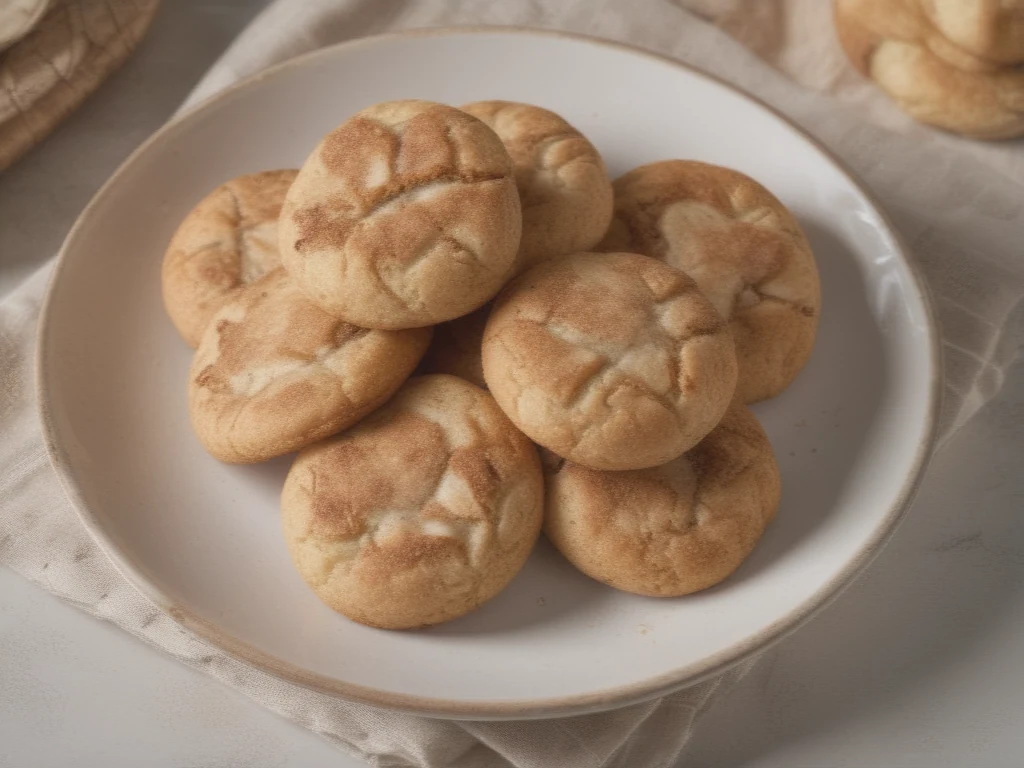
“A pastry classic with light buttery dough and cream of tartar, rolled in sugar and cinnamon before baking. In the oven at 180°C, it acquires a crackled surface with a slight characteristic acidity that balances the aromatic and sweet profile of the toasted cinnamon on the crust.”
What you need to know
- The cream of tartar reacts with the baking soda producing carbon dioxide that inflates and cracks the biscuit.
- The subtle acidity of the tartar provides the specific citrus flavor and prevents the rigid crystallization of the sugars.
- Rolling the balls in the cinnamon mixture before baking creates a protective golden and fragrant crust.
Ingredients
Main
- 2 ¾ cups of wheat flour
- 2 teaspoons of cream of tartar
- 1 teaspoon of baking soda
- 1 cup sugar
- ½ cup of butter (room temperature)
- 2 large eggs
- 1 tablespoon of ground cinnamon
- ½ teaspoon of salt
Instructions
Principal
- Preheat the oven to 180°C and line a baking sheet with parchment paper.
- In a bowl, mix the flour, baking soda, cream of tartar, and salt. Set aside.
- In the mixer, beat the butter and sugar until you get a light and fluffy cream.
- Add the eggs one at a time, mixing well after each addition.
- Gradually, incorporate the flour mixture until everything is well combined.
- In a small bowl, mix the cinnamon and 2 tablespoons of sugar.
- With the help of a spoon, make small balls of dough, roll them in the cinnamon and sugar mixture, and place them on the baking sheet.
- Bake for about 10 minutes or until the edges start to turn golden.
- Remove from the oven and let cool for a few minutes before serving.
Chef's tips
- Keep the butter at a soft pomade point, never liquid, to obtain the ideal aerated emulsion in the mixer.
- Roll the dough balls in the cinnamon bowl, covering the entire surface generously and evenly.
- Remove from the oven at ten minutes when cracks have formed and the base is slightly golden.
Variations
- Snickerdoodles with Spices: add grated nutmeg and cardamom powder to the cinnamon of the topping.
- Snickerdoodles with Cocoa: add two tablespoons of cocoa powder to the buttery dough.
- Stuffed Snickerdoodles: place a small piece of semi-sweet chocolate in the center of each dough ball.
Substitutions
- Cream of tartar can be replaced with two teaspoons of fresh lemon juice in the batter.
- Unsalted butter can be replaced by salted butter, removing the pinch of salt indicated.
- The white sugar of the crust can be swapped for fine crystal sugar or ground demerara sugar.
How to store
Store the cookies in an airtight container at room temperature for up to seven days. The outer layer of sugar and cinnamon protects the internal softness of the crumb, maintaining the pleasant consistency without hardening the cracked crust.
Can it be frozen?
Freeze the dough balls already coated in sugar and cinnamon on a lined baking sheet for two hours and transfer to plastic bags for up to ninety days. Bake directly frozen in an oven at 180°C for twelve minutes without defrosting.
What to serve with
Harmonize with a cup of latte with milk foam, creamy hot chocolate with cinnamon stick or apple tea with spices.
Frequently asked questions
Can I make snickerdoodles without cream of tartar?
You can replace the cream of tartar and baking soda with chemical baking powder, but the biscuit will lose the acidic touch and the classic cracks.
How to achieve the traditional crackled texture on the surface?
Do not flatten the balls on the baking sheet; the heat of the oven makes the dough expand and the thermal shock cracks the sugar and cinnamon crust.
Why do cookies wilt slightly when cooling?
It is the standard behavior of the snickerdoodle: it inflates quickly in the heat of the oven and settles when cooling, creating a chewy texture.
What is the function of cream of tartar in snickerdoodle?
Cream of tartar provides the typical acidity that activates the baking soda, generating the cracks in the crust and the characteristic soft crumb.