- Prep
- 20 min
- Cook
- 30 min
- Total time
- 50 min
- Yield
- 4 servings
- Difficulty
- EASY
- Calories
- 690 kcal
Quick summary
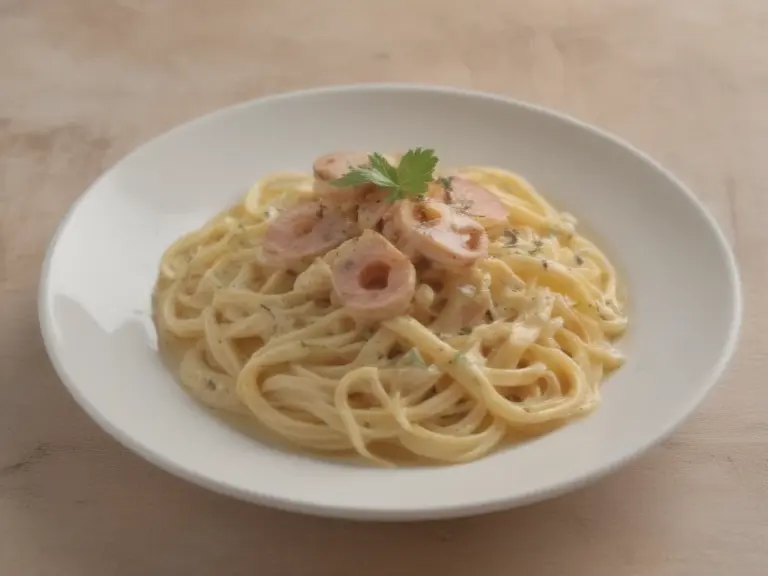
“Spaghetti carbonara is a Roman preparation structured on the emulsion of eggs, parmesan cheese, pork fat, and black pepper. The method does not use cream, relying on the residual heat of the freshly cooked pasta to transform the eggs into a smooth, velvety sauce. The crunchiness of the guanciale or sauteed bacon contrasts with the velvety texture of the sauce. When emulsifying off the heat with the starchy cooking water, you get a dish with an accentuated flavor and technical precision that should be eaten immediately.”
What you need to know
- Fry the guanciale or bacon over medium heat until golden and it releases the fat that will flavor the base.
- Beat the whole eggs with the finely grated parmesan until a pasty and homogeneous mixture is obtained.
- Emulsify the eggs with the dough off direct heat, adding boiling water so as not to curdle.
Ingredients
Main
- 400g of spaghetti
- 150g of guanciale or bacon cut into cubes
- 2 large eggs
- 100g of grated Parmesan cheese
- Black pepper to taste
- Salt to taste
Instructions
Principal
- In a large pot, cook the spaghetti in salted water until al dente.
- Meanwhile, in a frying pan, fry the guanciale or bacon over medium heat until crispy.
- In a bowl, beat the eggs together with the parmesan cheese until you get a homogeneous mixture.
- When the pasta is cooked, reserve some of the cooking water and drain the rest.
- Add the drained pasta to the skillet with the guanciale, removing from the heat directly.
- Mix quickly so as not to cook the eggs, adding a little of the cooking water to help form a creamy sauce.
- Finish by seasoning with black pepper to taste.
- Serve immediately, adding more Parmesan cheese if desired.
Chef's tips
- Turn off the heat and remove the skillet from the hot burner before pouring the egg and cheese mixture.
- Add small ladles of the cooking water, stirring non-stop to create the velvety cream.
- Grind the black pepper in the hot skillet to release the aromas before pouring the batter.
Variations
- Traditional Roman version: use 3 egg yolks and 1 whole egg to achieve a deep golden-yellow color.
- With peas: add half a cup of sauteed fresh peas along with the bacon in the final minutes.
- Toasted pepper: toast black peppercorns in a dry pan before grinding coarsely.
Substitutions
- Guanciale can be replaced with well-cured cubed bacon or sliced Italian pancetta.
- Parmesan can be swapped for Pecorino Romano or a combination in equal parts of both.
- Spaghetti can be replaced with bucatini or rigatoni, keeping the cooking al dente.
How to store
Immediate consumption is recommended. If there are leftovers, store in a closed container in the refrigerator for up to 24 hours and consume cold or at room temperature, as reheating curdles the yolks.
Can it be frozen?
Não congele este prato. The delicate emulsion of raw eggs cooked in residual heat breaks down in the freezer, resulting in watery liquid and soggy dough after thawing.
What to serve with
Serve in warmed deep plates, twirling the spaghetti with a ladle. Top with crispy guanciale cubes and sprinkle with grated cheese and freshly ground pepper.
Frequently asked questions
What is the difference between guanciale and bacon?
Guanciale is made from cured pork cheek with pepper and spices, while common bacon comes from the pork belly and undergoes smoking, presenting a more pronounced smoky flavor.
Can I use only egg yolks in this recipe?
Yes, many cooks prefer to use only yolks or a ratio of two yolks for each egg white, giving an even silkier texture and intense yellow hue to the sauce.
Why does the classic recipe not use heavy cream?
Traditional carbonara obtains its creamy texture solely from the emulsion between the guanciale fat, the cheese and egg proteins, and the starch from the pasta cooking water.
How to prevent eggs from turning into scrambled eggs in the dough?
The secret is to remove the pan completely from the stove before adding the egg and cheese mixture. Stir the pasta without stopping with tongs and add warm cooking water to control the heat.
You might also like