- Prep
- 20 min
- Cook
- 30 min
- Total time
- 50 min
- Yield
- 4 servings
- Difficulty
- EASY
- Calories
- 360 kcal
Quick summary
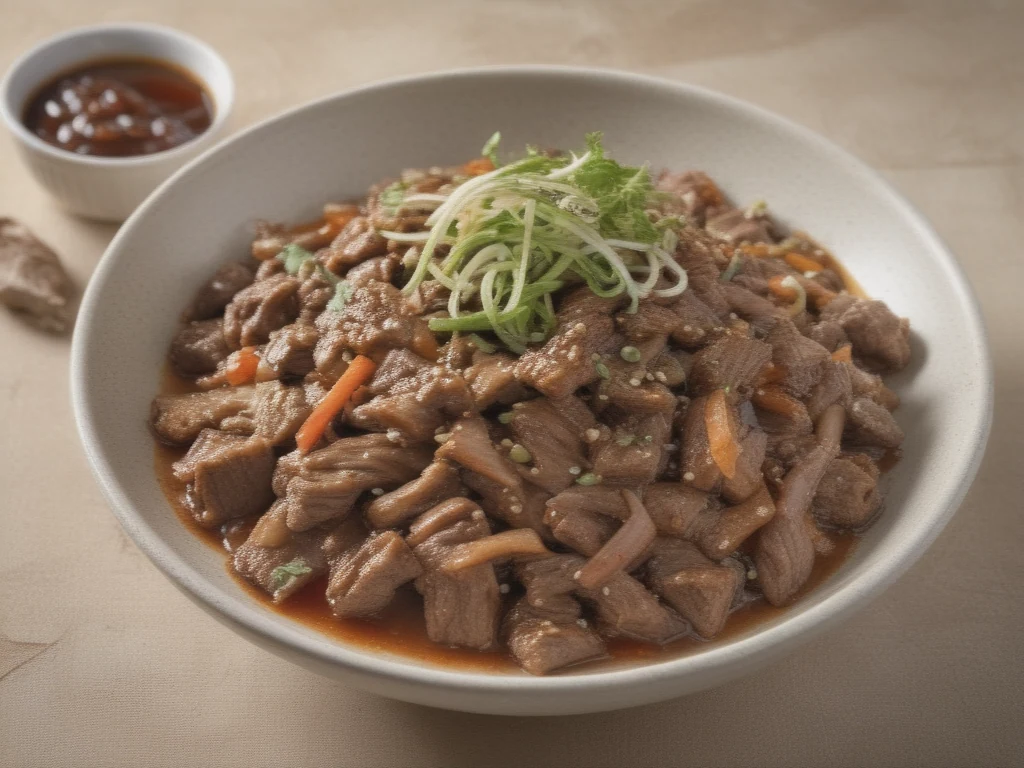
“Bulgogi is a Korean cuisine specialty that combines thin slices of beef sirloin marinated in soy sauce, brown sugar, garlic, and sesame oil. The marinade breaks down the meat fibers and promotes rapid caramelization in contact with the griddle or skillet over high heat. The brief sauté of five to seven minutes browns the meat and cooks the onion and carrot strips without losing the crunchiness. Finished with toasted sesame seeds, it delivers an aromatic dish for four people.”
What you need to know
- Slice the meat against the grain into almost translucent sheets to ensure immediate tenderness on the hot griddle.
- Marinate the flank steak for at least 30 minutes under refrigeration to set the brown sugar and shoyu.
- Grill over high heat in a very hot pan without crowding, avoiding releasing water to sear the meat quickly.
Ingredients
Main
- 500 g of beef sirloin in thin slices
- 4 tablespoons of soy sauce
- 2 tablespoons of brown sugar
- 3 cloves garlic, minced
- 1 tablespoon of sesame oil
- 1/2 sliced onion
- 1 carrot in strips
- Toasted sesame to taste to finish
Instructions
Principal
- In a bowl, mix the soy sauce, brown sugar, garlic, and sesame oil.
- Add the sliced meat and mix well, ensuring all slices are coated with the marinade.
- Let marinate for at least 30 minutes, or preferably 2 hours in the refrigerator.
- Heat a griddle or pan over high heat until very hot.
- Add the marinated meat and cook for about 5-7 minutes, turning occasionally until browned.
- Add the onions and carrots during cooking, stirring to incorporate.
- Remove from heat and finish with toasted sesame seeds to taste.
- Serve immediately with white rice.
Chef's tips
- Freeze the strip steak piece for 45 minutes before cutting; semi-frozen meat makes it easier to slice thin sheets.
- Let the skillet heat up until it releases light smoke before placing the first portion of marinated meat.
- Toast the sesame seeds in a dry skillet for 1 minute before sprinkling to intensify the aromatic oils.
Variations
- Spicy Bulgogi: add a tablespoon of Korean chili paste (gochujang) to the initial marinade.
- Bulgogi with mushrooms: add sliced shiitake or shimeji mushrooms along with the carrot and onion in the stir-fry.
- Pork Bulgogi: use thinly sliced pork loin following the same proportions of marinade and hot griddle.
Substitutions
- The sirloin can be replaced with rump steak, filet mignon, or thinly sliced flank steak against the grain.
- Brown sugar can be swapped for Asian pear or finely grated apple, which soften the meat naturally.
- Traditional toasted sesame oil can be replaced by light sesame oil with a pinch of ground sesame.
How to store
Guarde em pote fechado na geladeira por até 3 dias. Reaqueça na frigideira em fogo alto por 2 minutos para preservar o brilho e a textura macia das fatias bovinas.
Can it be frozen?
The raw meat with the marinade can be frozen in an airtight bag for up to 90 days at 18°C below zero. Thaw in the refrigerator for 12 hours and take directly to the hot skillet to brown.
What to serve with
Serve accompanied by steamed short-grain white rice (gohan), fresh lettuce leaves for making wraps (ssam), and traditional spicy fermented napa cabbage pickles (kimchi).
Frequently asked questions
Why should the meat cut be so thin in bulgogi?
Thin slices increase the absorption area of the marinade and cook in just 5 minutes over high heat, caramelizing the brown sugar on the surface without dehydrating the center of the sirloin steak.
How to cook bulgogi on a home stove without water pooling in the pan?
Cook the meat in two or three small batches in a very hot heavy-bottomed skillet. Putting all the meat at once drops the temperature of the metal, causing the meat to steam instead of sear.
Can grated pear replace sugar in the Korean marinade?
Yes, in Korea it's very common to use grated Asian pear (or Fuji apple). It contains the enzyme calpain, which acts as a natural enzymatic tenderizer for the protein fibers of beef.
What is the traditional way to eat bulgogi at the table?
It is traditionally served with fresh lettuce leaves. Place a leaf in the palm of your hand, place a slice of hot meat, a little rice, and soybean paste (ssamjang), closing into a small bundle to eat.