- Prep
- 45 min
- Cook
- 30 min
- Total time
- 75 min
- Yield
- 2 medium breads (approx. 12-16 slices)
- Difficulty
- Medium
- Calories
- 245 kcal
Quick summary
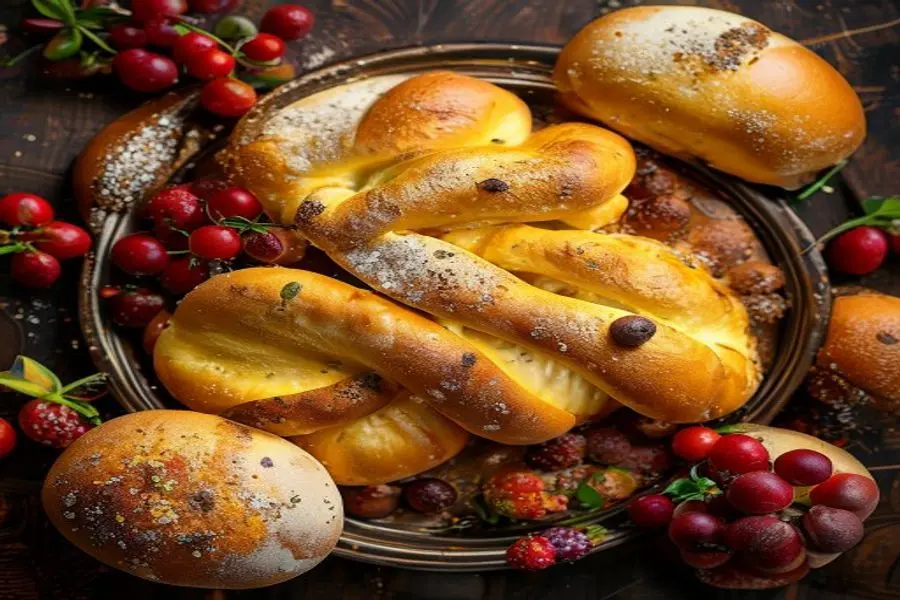
“Traditional Armenian Easter braided bread with a rich, fluffy, buttery crumb, scented with the ancient spice mahlab. Baked until reaching a shiny golden crust with sesame and nigella seeds.”
What you need to know
- Mahlab (ground St. Lucie cherry seed) confers the unmistakable fragrant aroma between almond and cherry.
- Kneading for 10 to 15 minutes develops the gluten network needed to support the rich amount of butter and eggs.
- The braided shaping in three strands ensures uniform growth and the classic festive presentation.
Ingredients
Main
- ml Whole milk
- g Refined sugar
- g Fermento biológico seco
- g All-purpose flour
- g Salt
- g Ground Mahlab
- units Large eggs
- g Unsalted butter
- Sesame seeds or nigella seeds
Instructions
Principal
- Activating the FermentationIn simple terms: Start by combining the warm milk, 10g of sugar, and the dry yeast in a large bowl. Mix gently and wait for five to ten minutes. The mixture should form a creamy foam on the surface, indicating the yeast is active and ready to work.
- Preparing the Base DoughThe short answer is: In another bowl, combine the wheat flour, salt, and ground mahlab. Make a well in the center of this dry mixture. Add the activated yeast mixture, 1 beaten egg, and the melted and cooled butter to the hole. Start mixing everything until a homogeneous, sticky dough forms.
- Gluten DevelopmentTransfer the dough to a lightly floured surface and knead it vigorously for about 10 to 15 minutes. The professional technique is to develop the gluten, making the dough smooth, elastic, and less sticky. It should pass the 'veil' test, stretching thin without tearing.
- First FermentationGrease a large bowl with oil, place the dough, turn it to grease all sides, and cover with a clean cloth or plastic wrap. Let the dough rise in a warm place for 1.5 to 2 hours, or until doubled in volume. This process is crucial for the lightness of the bread.
- Shaping the BraidsAfter the first fermentation, deflate the dough by pressing it gently. Divide the dough into two equal parts and each part into three portions. Roll each portion into a rope of approximately 30-40 cm. Braid the three strands tightly, joining the ends to form the breads.
- Second FermentationTransfer the braided loaves to a baking sheet lined with parchment paper. Cover again with a cloth and let rise in a warm place for another 45 to 60 minutes, or until the rolls are visibly puffier. Preheat the oven to 180°C (medium temperature) for the last 15 minutes.
- Finishing and BakingBeat the remaining egg with a tablespoon of water or milk to make the egg wash. Brush the surface of the breads delicately with this mixture and, if desired, sprinkle sesame or nigella seeds. Take to the preheated oven and bake for 25 to 35 minutes, or until the Choreg is golden and cooked inside.
- Cooling and ServingRemove the breads from the oven and transfer them to a wire rack to cool completely before cutting. Serve warm or at room temperature. This cooling time allows the internal structure of the bread to stabilize, ensuring a perfect texture.
Chef's tips
- Heat the milk until warm to the touch (about 36°C) to activate the yeast without scalding the microorganisms.
- Let the dough double in volume in a place protected from drafts during the first 60-minute fermentation.
- Brush with egg yolk beaten with a teaspoon of milk just before baking to obtain a varnished shine.
Variations
- Incorporate 1 cup of light raisins macerated in orange blossom water into the dough before kneading.
- Sprinkle raw sliced almonds over the braided bread along with the sesame seeds before taking it to the oven.
- Fill the braid strands with a thin paste of crushed nuts with sugar and cinnamon powder.
Substitutions
- Ground mahlab can be replaced by a combination of bitter almond essence and cardamom powder.
- Unsalted butter can be replaced with vegetable shortening or sunflower oil while maintaining a soft texture.
- Nigella seeds can be replaced entirely by toasted white sesame or poppy seeds.
How to store
Store in a tightly closed plastic bag or bread box for up to 5 days at room temperature to avoid drying out. Slice and toast in a skillet with butter from the third day on.
Can it be frozen?
Freeze the whole loaves already baked and cooled, wrapped in two layers of plastic wrap and aluminum foil, for up to 90 days. To thaw, leave on the countertop for 3 hours and reheat at 160°C for 10 minutes.
What to serve with
Pairs perfectly with Armenian or Turkish coffee boiled with cardamom, strong black tea, or salty feta cheese.
Frequently asked questions
Can I use fresh biological yeast instead of dry?
Yes, use 30 grams of fresh compressed yeast in place of the recommended 10 grams of instant dry yeast.
What is mahlab and what is its importance in this bread?
Mahlab is the ground pit of a wild Mediterranean cherry that has a unique flavor, reminiscent of marzipan and nutmeg, being the indispensable aromatic signature of authentic choreg.
How to braid the strands without deforming the thickness of the bread?
Open the three dough rolls with your hands, working from the center outwards to make them cylindrical, and braid without pulling or squeezing too hard, allowing room for expansion in the oven.
Why did the dough take a long time to rise in the first stage?
Doughs enriched with eggs, sugar, and fat ferment more slowly than simple bread doughs; make sure to leave the bowl in a warm, draft-free environment.