- Prep
- 20 min
- Cook
- 30 min
- Total time
- 50 min
- Yield
- 4 servings
- Difficulty
- EASY
- Calories
- 230 kcal
Quick summary
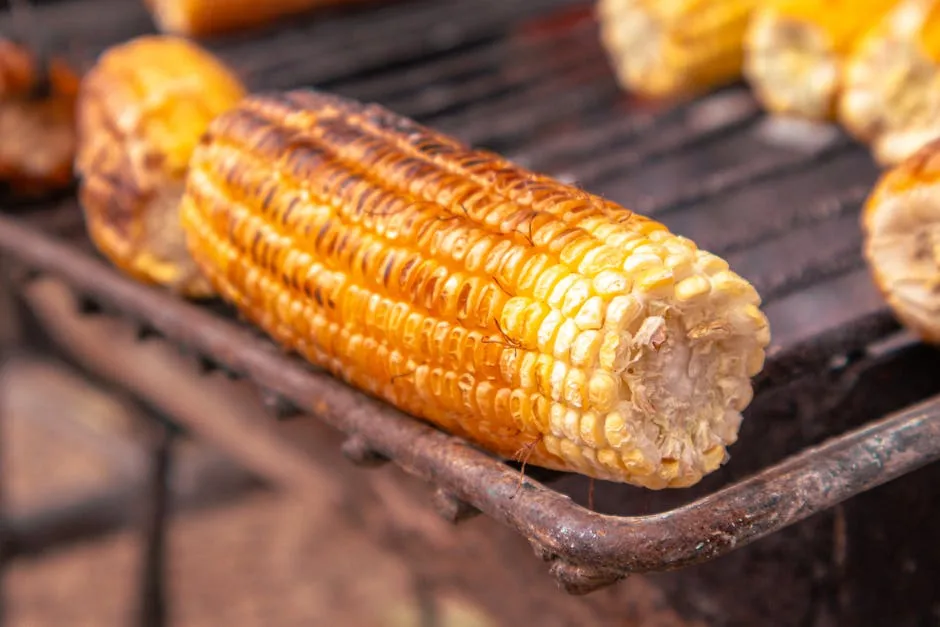
“Grilled corn on a skewer consists of ears of green corn brushed with oil, seasoned, and toasted directly over medium coals or a hot griddle. Dry heat grills the surface of the grains, caramelizing the natural sugars without dehydrating the interior moisture of the pulp. By turning the corn cobs regularly for fifteen minutes, you get uniform cooking with toasted marks. Served hot with lemon wedges and grated parmesan cheese, it is a practical side dish for four servings.”
What you need to know
- Clean the corn cobs and skewer them firmly at the base to make it easier to turn them safely over the coals.
- Brush with oil and season with salt and black pepper before grilling to protect the grains.
- Grill for 15 minutes over medium coals turning constantly to toast evenly on all sides.
Ingredients
Main
- 8 ears of green corn
- Salt to taste
- 1 lemon cut into slices
- Queijo parmesão ralado (opcional)
- Black pepper to taste
Instructions
Principal
- Prepare the grill and light the charcoal, waiting for medium coals.
- Remove the corn husks and, if you prefer, leave the husk around to add flavor.
- Insert the skewers into the center of the corn cobs.
- Brush the corn with a little oil and season with salt and black pepper.
- Place the mirrors on the grill or barbecue.
- Grill for about 15 minutes, turning regularly to ensure even cooking.
- When the corn is well browned and has grill marks, remove them.
- Serve hot, accompanied by lemon slices and, if desired, sprinkle Parmesan cheese.
Chef's tips
- Choose fresh ears with green husks and milky grains; dry or old corn gets hard on the grill.
- Maintain constant embers without direct flames so the corn cooks without burning the grain husks.
- Sprinkle grated parmesan cheese immediately after removing from the heat so the cheese melts in the residual heat.
Variations
- Complete elote-style corn: brush with mayonnaise mixed with sour cream before sprinkling the cheese and paprika.
- Grilled corn with paprika: sprinkle smoked paprika and cayenne pepper over the hot corn cobs along with the lemon.
- Corn on the cob: pull the husk back without detaching it, tie it to form a handle, and grill with rustic notes.
Substitutions
- The vegetable oil can be replaced by melted butter brushed over the cobs on the grill.
- Grated parmesan cheese can be swapped for Mexican cotija cheese, grated queijo coalho, or cured queijo minas.
- Traditional Tahiti lime can be replaced with Meyer lemon or Rangpur lime for different aromatic notes.
How to store
Consume immediately. Leftovers can be kept in a closed container in the refrigerator for up to 2 days. Reheat in a skillet with butter or shell the toasted grains into cold salads.
Can it be frozen?
Do not freeze the whole cob. Thresh the grilled grains and freeze in a sealed container for up to 60 days at 18°C below zero, enjoying them in farofa, salads, and quick stir-fries.
What to serve with
Accompanies cuts of beef and pork roasted on the grill, homemade burgers, and Mexican dishes like tacos and burritos. Serve with garlic-seasoned mayonnaise and lemon slices.
Frequently asked questions
How to make grilled corn on the stove if you don't have a grill?
Use a very hot cast-iron skillet greased with butter or place the cob directly on the gas stove grate over medium heat, rotating with metal tongs.
What to do to make the parmesan cheese stick to the corn on the cob?
Brush with melted butter or rub damp lemon slices over the hot grains as soon as they come off the grill and sprinkle the cheese immediately after; surface moisture makes the cheese adhere firmly.
Is it necessary to pre-cook the corn cobs in water before grilling?
It is not mandatory if the corn is young and fresh. Grilling raw over medium coals preserves the crunchiness and natural sweetness of the kernels, cooking them through while browning on the outside in 15 minutes.
Why do some corn kernels pop on the grill?
The water vapor trapped inside the grains under intense heat can cause small pops. This is normal; just rotate the cobs frequently to distribute the heat and avoid sudden ruptures.