- Prep
- 20 min
- Cook
- 30 min
- Total time
- 50 min
- Yield
- 4 servings
- Difficulty
- EASY
- Calories
- 430 kcal
Quick summary
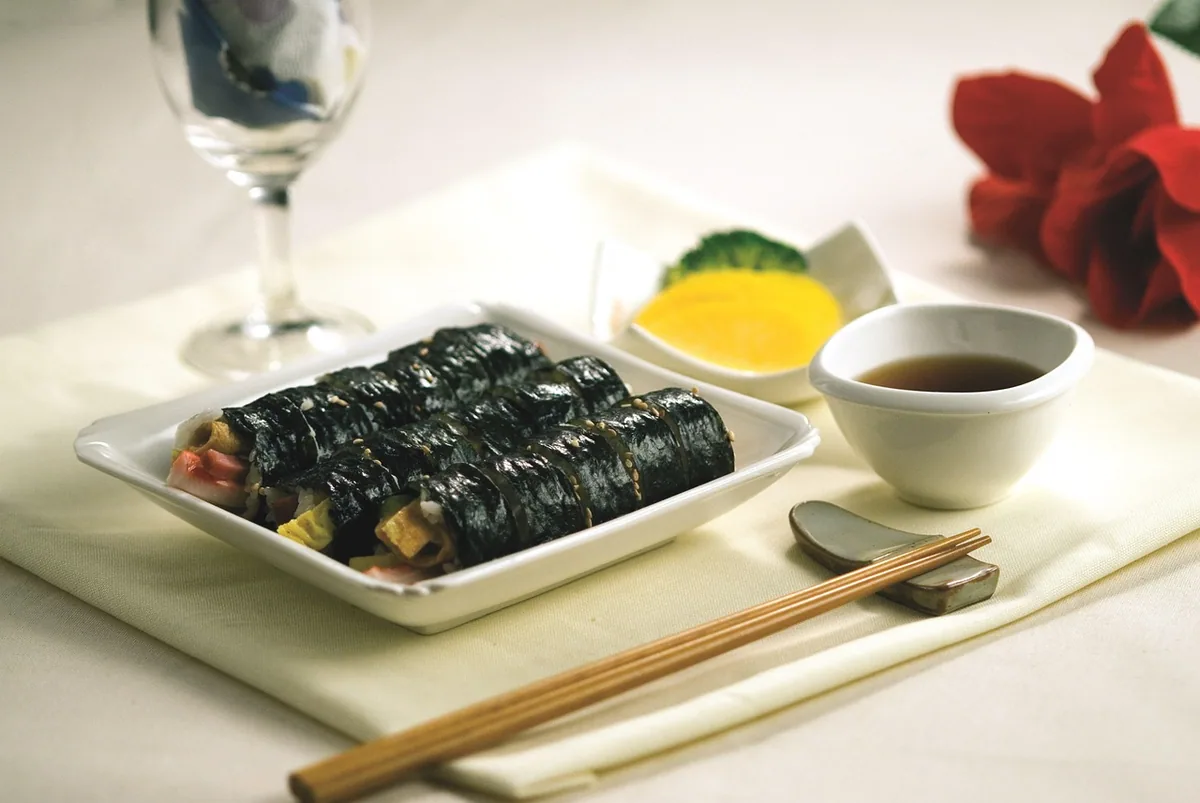
“Traditional Korean kitchen roll prepared with toasted nori seaweed sheets wrapping seasoned Japanese rice with aromatic sesame paste and oil. Stuffed with thin strips of carrot and cucumber and shredded meat, it is rolled on the mat and sliced into perfect rounds for picnics and snacks.”
What you need to know
- Seasoning the rice with oil and sesame paste is the aromatic signature that differentiates kimbap from traditional sushi.
- Leaving two centimeters free at the top of the nori ensures a perfect seal and firmness when rolling with the mat.
- Slicing the roll with a knife moistened with water and oil produces clean slices and preserves the design of the filling.
Ingredients
Main
- 2 cups of Japanese rice
- 4 nori sheets
- 1 medium carrot cut into thin strips
- 1 Japanese cucumber cut into strips
- 100g of cooked and shredded beef or chicken
- 2 tablespoons of sesame paste
- 1 tablespoon of sesame oil
- Salt to taste
Instructions
Principal
- Start by cooking the rice in the pot with an adequate amount of water, following the package instructions.
- Meanwhile, prepare the vegetables by cutting the carrot and cucumber into thin strips.
- When the rice is ready, let it cool and add the sesame paste and sesame oil, mixing well.
- On the sushi mat, place a sheet of nori with the shiny side down.
- Spread an even layer of rice over the nori sheet, leaving a 2 cm border at the top.
- Add the carrot, cucumber, and shredded meat to the center of the rice.
- Carefully roll the mat, pressing gently to form a very tight cylinder.
- Repeat the process with the remaining nori sheets and the filling.
- Use a sharp knife to cut the Kimbap roll into pieces of approximately 2 cm.
- Serve with soy sauce or hot sauce, if desired.
Chef's tips
- Spread the rice in a thin and constant layer to maintain the correct proportion with the crispy vegetables.
- Brush a drizzle of sesame oil over the surface of the seaweed before cutting to provide shine and aroma.
- Press the bamboo mat with homogeneous firmness when rolling to prevent the center from loosening when cutting.
Variations
- Vegetarian Kimbap: compose the filling with sautéed spinach, carrot, grilled tofu strips, and radish.
- Spicy Tuna Kimbap: incorporate tuna mixed with mayonnaise and gochujang paste in the center of the rice.
- Fried Kimbap: pass the cut rolls in beaten egg and brown quickly in the hot skillet.
Substitutions
- The cooked meat can be swapped for strips of rolled omelet, tuna with mayonnaise, or thin slices of ham.
- Tahini can be substituted with toasted ground sesame seeds in the same proportion.
- Fresh cucumber can be replaced by Korean sweet and sour pickled yellow radish danmuji.
How to store
The sliced kimbap should preferably be consumed on the same day to preserve the texture of the rice. Leftovers can stay in the refrigerator for up to twenty-four hours well wrapped in plastic wrap; heat slightly to soften the rice.
Can it be frozen?
It is not recommended to freeze ready-made kimbap, as the Japanese rice crystallizes and crumbles upon thawing, and the vegetables release water that softens the nori. Prepare the ideal amount for consumption on the same day.
What to serve with
Harmonize with soy sauce seasoned with drops of lemon, pickled yellow radish (danmuji), light miso soup, and hot green tea.
Frequently asked questions
Should the kimbap rice be used hot or cold?
It should be warm; if it is too hot it burns and softens the nori seaweed, and if it is cold it becomes hard and difficult to spread.
What is the main difference between Kimbap and Japanese Sushi?
Kimbap is seasoned with sesame oil and filled with cooked meats and vegetables; sushi uses rice vinegar and prioritizes raw fish.
Is it mandatory to sauté the carrot and cucumber before rolling?
The carrot can be quickly sautéed to soften; cucumber is usually used raw and drained to ensure fresh crunchiness.
How to prevent the kimbap roll from falling apart when being sliced?
Press firmly with the mat when rolling and use an extremely sharp and damp knife, cutting in smooth back-and-forth motions without crushing.
You might also like