- Prep
- 25 min
- Cook
- 20 min
- Total time
- 45 min
- Yield
- 4 servings
- Difficulty
- Medium
- Calories
- 510 kcal
Quick summary
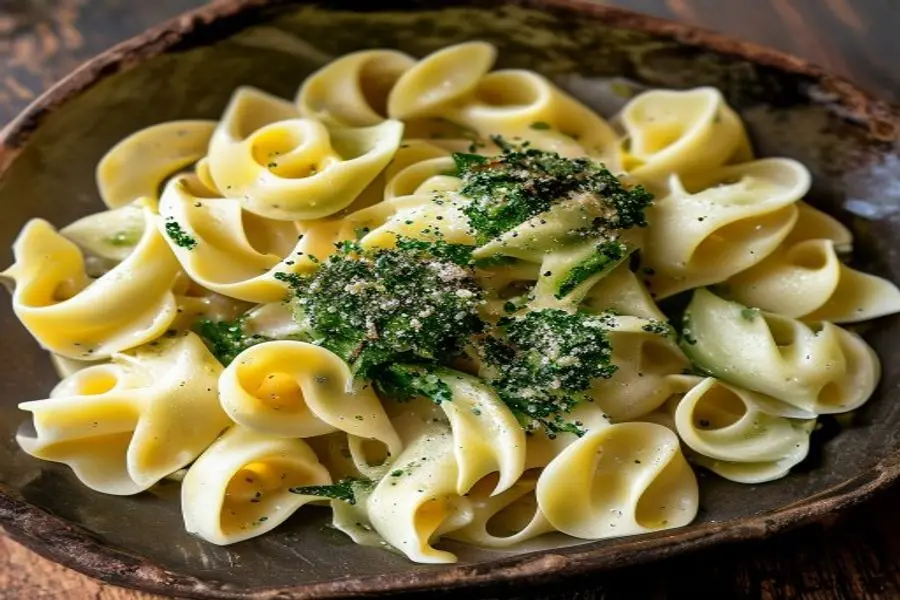
“Orecchiette with cime di rapa is the definitive peasant dish of the Puglia region, uniting fresh handmade pasta with the slightly bitter and spicy flavor of turnip greens. Sauteed in abundant extra virgin olive oil, sliced garlic, and peperoncino pepper, it delivers Italian purity and simplicity.”
What you need to know
- Cooking the greens in boiling salted water before the pasta flavors the water and softens the leaves while maintaining the bright green color.
- Cooking the orecchiette in the same mineralized water infuses the vegetable flavor into the durum wheat grains.
- The emulsion of the starchy cooking water with the garlic-scented olive oil creates a fluid sauce without resorting to butter or cream.
Ingredients
Main
- grams Orecchiette (pasta)
- grams Cime di Rapa (broccoli rabe)
- ml Extra virgin olive oil
- cloves (large) Garlic
- units (or to taste) Dried red pepper (peperoncino)
- Sal grosso
- Pasta cooking water
- grams (optional) Grated Pecorino Romano cheese
Instructions
Principal
- Wash and prepare the cime di rapa. Discard the very yellowed leaves and the harder, more fibrous stems. Separate the leaves and the tender florets. Wash them well in cold water and drain. This step is crucial for the final texture of the greens.
- In a large pot, boil plenty of water with coarse salt (like seawater). Add the cime di rapa and cook for 3-5 minutes, or until al dente. Remove with a slotted spoon and reserve, but do not discard the water.
- In the same boiling water, add the orecchiette and cook according to package instructions, until al dente. Before draining, reserve about 1 cup (240ml) of the cooking water. It is an elixir of flavor and starch.
- While the pasta cooks, heat the extra virgin olive oil in a large skillet over medium heat. Add the sliced garlic cloves and the dried red pepper. Sauté until the garlic is lightly browned and releases its aroma, about 2-3 minutes. Be careful not to burn the garlic.
- Add the cooked rapini to the skillet with the garlic and pepper. Sauté for 2-3 more minutes, mixing well so the flavors incorporate. Season with salt, if necessary, remembering that the pasta water is already salted.
- With the orecchiette still al dente, drain them (reserving the water) and add them directly to the skillet with the cime di rapa. Mix well. Add some of the reserved cooking water, about 1/4 to 1/2 cup, and stir vigorously. This will create a creamy sauce.
- Cook for 1-2 more minutes, stirring constantly, until the sauce emulsifies and coats the pasta perfectly. Remove from the heat. Serve immediately, optionally with a drizzle of fresh olive oil and grated Pecorino Romano cheese. The aroma is divine!
Chef's tips
- Rigorously remove the thick, fibrous stems from the base, using only the tender florets and dark green leaves.
- Slice the garlic into thin slices and sauté over low heat in olive oil so it browns delicately without burning or releasing bitterness.
- Reserve a whole cup of the pasta cooking water before draining to adjust the fluid texture when sautéing.
Variations
- Add 3 chopped anchovy fillets to the hot olive oil with garlic until they dissolve completely, providing traditional umami.
- Sprinkle rustic bread crumbs toasted in a skillet with olive oil and garlic over the dish to give crunch to the bites.
- Add crumbled and fried artisanal Italian sausage along with the garlic for a more substantial winter version.
Substitutions
- The cime di rapa can be replaced by fresh broccoli rabe, tender mustard greens, escarole, or kale sprouts.
- Traditional orecchiette can be replaced with fusilli, cavatelli, or short pasta with ridges that hold the leaves.
- Pecorino Romano cheese can be replaced by grated parmesan cheese or omitted for an authentic vegan Pugliese version.
How to store
Keep leftovers in an airtight container in the refrigerator for up to 3 days. To reheat, sauté the pasta in a skillet with a drizzle of olive oil and 2 tablespoons of boiling water to revitalize the shine and moisture of the dish.
Can it be frozen?
It is not recommended to freeze this recipe with cooked pasta, as the elastic texture of the orecchiette and the cime di rapa leaves soften too much when thawing. Prepare the fresh dish in the appropriate quantity for immediate consumption.
What to serve with
Accompanied by slices of grilled rustic bread drizzled with raw olive oil, black olives in brine, and ripe tomato salads. Harmonizes perfectly with dry white wines from Puglia such as Fiano di Avellino, Locorotondo, or a good chilled rosé.
Frequently asked questions
Is it mandatory to put grated cheese in this Pugliese recipe?
Traditionally in Puglia, many don't use cheese, prioritizing olive oil and anchovies; the Pecorino is optional to personal taste.
How to ensure the sauce does not get dry in the skillet?
Pour half a cup of the pasta cooking water into the very hot skillet and stir vigorously to form a silky emulsion.
What to do if the rapini is too bitter?
Blanching in boiling water with plenty of salt for 3 to 5 minutes attenuates the natural bitterness and balances the flavor.
Can I use frozen cime di rapa in this preparation?
Yes, thaw and drain the excess liquid very well before sautéing in the olive oil heated with the garlic cloves.