- Prep
- 20 min
- Cook
- 30 min
- Total time
- 50 min
- Yield
- 4 servings
- Difficulty
- EASY
- Calories
- 490 kcal
Quick summary
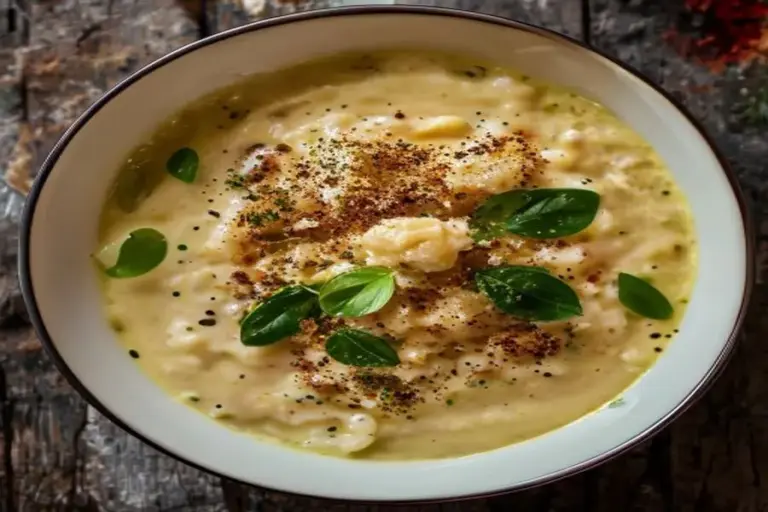
“Milanese risotto is an Italian classic characterized by the golden color of saffron and the velvety texture of arborio rice. The method is based on toasting the grains in butter with onion, followed by progressive hydration with ladles of hot broth stirred with constancy. The final mantecatura, done off the heat with parmesan cheese and butter, binds the starch released throughout the cooking. The result is a fluid and al dente dish, decorated with chopped parsley with a yield for four portions.”
What you need to know
- Toasting the Arborio rice grains in butter for 2 minutes to seal the starch and maintain structure.
- Add the hot vegetable broth gradually, stirring constantly to release the natural creaminess.
- Mix the parmesan cheese and saffron off the heat to achieve a shiny and velvety texture.
Ingredients
Main
- 2 cups of arborio rice
- 4 cups of heated vegetable broth
- 1 medium onion, chopped
- 2 tablespoons butter
- 100g of grated Parmesan cheese
- 1 teaspoon of turmeric
- Salt and pepper to taste
- Chopped parsley for garnish
Instructions
Principal
- In a deep pot, melt the butter and saute the onion until translucent.
- Add the arborio rice and sauté for about 2 minutes, stirring constantly.
- Add the saffron and mix well.
- Add a ladle of vegetable broth and cook over medium heat, stirring constantly.
- When the broth starts to evaporate, add another ladle and continue stirring.
- Repeat the process until the rice is al dente and creamy.
- When the rice is ready, remove from heat and add the parmesan cheese, adjusting salt and pepper.
- Garnish with chopped parsley and serve immediately.
Chef's tips
- Keep the vegetable broth hot over low heat so as not to cool the pot during the ladle-by-ladle addition.
- Stir with a wooden spoon in circular motions to encourage the release of starch without breaking the rice.
- Adjust the salt only at the end, as the reduction of the broth and the parmesan cheese already concentrate the sodium.
Variations
- With white wine: deglaze the rice with 80ml of dry white wine after the initial toasting of the onion.
- Traditional side dish: serve the risotto as a base to accompany ossobuco braised in wine sauce.
- With peas: add half a cup of fresh cooked peas in the final minutes of cooking.
Substitutions
- Arborio rice can be replaced by carnaroli rice, which retains an excellent al dente texture.
- Saffron powder can be swapped for saffron pistils hydrated in two tablespoons of warm broth.
- Vegetable broth can be replaced by clear homemade chicken broth for a fuller profile.
How to store
Guarde em pote hermético na geladeira por até 2 dias. Reaqueça em fogo baixo com um pouco de água ou caldo quente, ou aproveite as sobras geladas para modelar e fritar bolinhos arancini.
Can it be frozen?
Do not freeze ready-made risotto. The rice starch loses support and the cheese separates from the butter, resulting in a soggy and brittle texture after microwave thawing.
What to serve with
Serve on heated shallow plates, tapping lightly on the base of the plate so the rice opens in a wave pattern. Sprinkle chopped fresh parsley and serve with freshly ground black pepper.
Frequently asked questions
Can I wash the arborio rice before preparing the risotto?
Never wash rice for risotto. Washing removes the surface starch of the grain, which is the fundamental component responsible for ensuring the creaminess of the broth during cooking.
Why is it necessary to add the vegetable broth gradually?
The ladle-by-ladle addition combined with the continuous stirring motion makes the grains rub together, releasing the starch that creates the creamy texture without turning the risotto into mush.
What is 'mantecatura' and why is it done off the heat?
Mantecatura is the vigorous emulsion of cold butter and grated cheese into the hot grains. The residual heat is sufficient to melt the dairy without the fat separating and leaving the dish oily.
How to know the exact cooking point of Arborio rice?
The grain should be 'al dente', that is, soft on the outside with a tiny central point of resistance to the tooth, without being raw or crumbling. Generally, this point is reached between 16 and 18 minutes of cooking.
You might also like