- Prep
- 15 min
- Cook
- 20 min
- Total time
- 35 min
- Yield
- 4 servings
- Difficulty
- Easy
- Calories
- 520 kcal
Quick summary
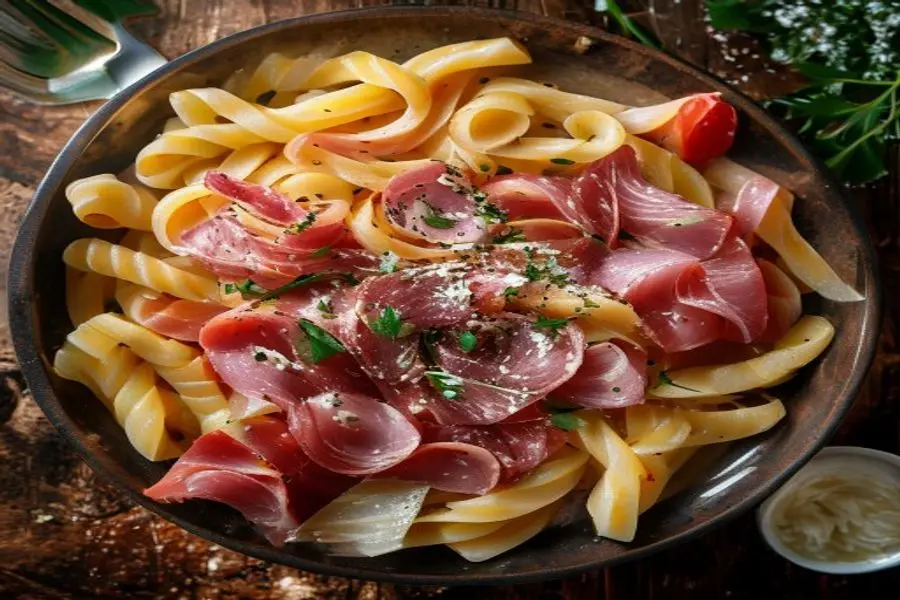
“This classic combination of short pasta with prosciutto cotto, sweet peas, and fresh cream delivers a velvety sauce without weighing on the palate. An elegant and practical Italian preparation that unites the salinity of the sausage with the creaminess of the parmesan.”
What you need to know
- The prosciutto cotto toasted gently in butter and olive oil releases aromatic fat without drying out or over-salting.
- Starch-laden pasta cooking water is essential for emulsifying the heavy cream and grated Parmesan cheese.
- Pasta cooking should be stopped 2 minutes before the package indication to be finished inside the sauce.
Ingredients
Main
- g Short pasta (Penne, Fusilli, or Farfalle)
- g Prosciutto Cotto
- g Peas (fresh or frozen)
- unit Shallot or small onion
- cloves Garlic
- ml Fresh heavy cream
- g Parmesan Cheese
- tablespoons Extra virgin olive oil
- tablespoon Unsalted butter
- ml Dry white wine (optional)
- ml Vegetable or chicken broth (or pasta water)
- Salt and black pepper
- tablespoons Fresh parsley
Instructions
Principal
- In a large pot with plenty of salted water, cook the pasta according to the package instructions, subtracting 2 minutes from the total time. Before draining, reserve about 1 cup of the cooking water.
- While the pasta cooks, heat the olive oil and butter in a deep skillet or wide pot over medium heat. Add the chopped shallot (or onion) and sauté until soft and translucent, for about 3-4 minutes.
- Add the minced garlic and diced prosciutto cotto to the skillet. Cook for another 2-3 minutes, stirring occasionally, until the prosciutto starts to brown slightly and release its aroma.
- If using, add the white wine and let it evaporate completely, scraping the bottom of the pot to release the flavors. Then, incorporate the peas and the vegetable broth. Let it cook for 3-4 minutes until the peas are tender but still firm.
- Pour the heavy cream into the skillet and let it heat up, without boiling intensely. Season with salt and black pepper to taste. Remember that the prosciutto is already salty and the Parmesan will also contribute to the flavor.
- Add the drained al dente pasta directly to the sauce in the skillet. Add the grated Parmesan cheese and mix well. If the sauce seems too thick, add a little of the reserved pasta cooking water, one tablespoon at a time, until the desired consistency is reached.
- Continue cooking and stirring for another 1-2 minutes, allowing the pasta to absorb the sauce flavors and finish cooking. Finish with fresh chopped parsley. Serve immediately, with extra grated parmesan on top, if desired.
Chef's tips
- Heat the heavy cream over low heat without allowing violent boiling to prevent the separation of milk fat from the whey.
- Add the parmesan cheese with the heat already off, stirring vigorously to ensure a homogeneous and silky sauce.
- If using frozen peas, there is no need to defrost beforehand; add them directly to the skillet with the broth.
Variations
- Add fine lemon zest and a pinch of freshly grated nutmeg to brighten the creamy notes of the sauce.
- Incorporate sliced and sautéed Paris mushrooms along with the shallot to enrich the dish with earthy texture.
- Add thin strips of Italian zucchini sautéed quickly along with the peas for an extra green touch.
Substitutions
- Prosciutto cotto can be replaced by finely chopped Parma ham or small golden bacon cubes.
- Fresh cream can be swapped for pasteurized heavy cream with a fat content above 35%.
- Penne can be replaced with rigatoni, conchiglie, or fusilli, short pastas that capture cream-based sauces well.
How to store
Store in a closed container in the refrigerator for up to 2 days. Reheat over low heat adding a drop of milk to restore the sauce emulsion.
Can it be frozen?
We do not recommend freezing this dish, as the cream and starch in the dough tend to curdle and lose the silky texture upon defrosting.
What to serve with
Serve with a salad of bitter leaves like arugula and radicchio dressed with balsamic vinaigrette and refreshing dry white wine.
Frequently asked questions
Why reserve the pasta water before draining?
The starch present in this water acts as a natural binder between the fat of the heavy cream, the grated cheese and the surface of the cooked pasta.
What is the difference between using prosciutto cotto instead of prosciutto crudo in this recipe?
Cotto is a mild and less salty cooked ham, which withstands the heat of the pan without becoming excessively fibrous or hard.
Can I use canned peas for this preparation?
Canned peas are very soft and fall apart easily; prefer frozen ones, which maintain bright green color and firm texture.
How to prevent the heavy cream from curdling when it comes into contact with heat?
Keep the heat low and add warm broth or a little of the pasta water before pouring the fresh cream into the skillet.