- Prep
- 20 min
- Cook
- 30 min
- Total time
- 50 min
- Yield
- 4 servings
- Difficulty
- EASY
- Calories
- 380 kcal
Quick summary
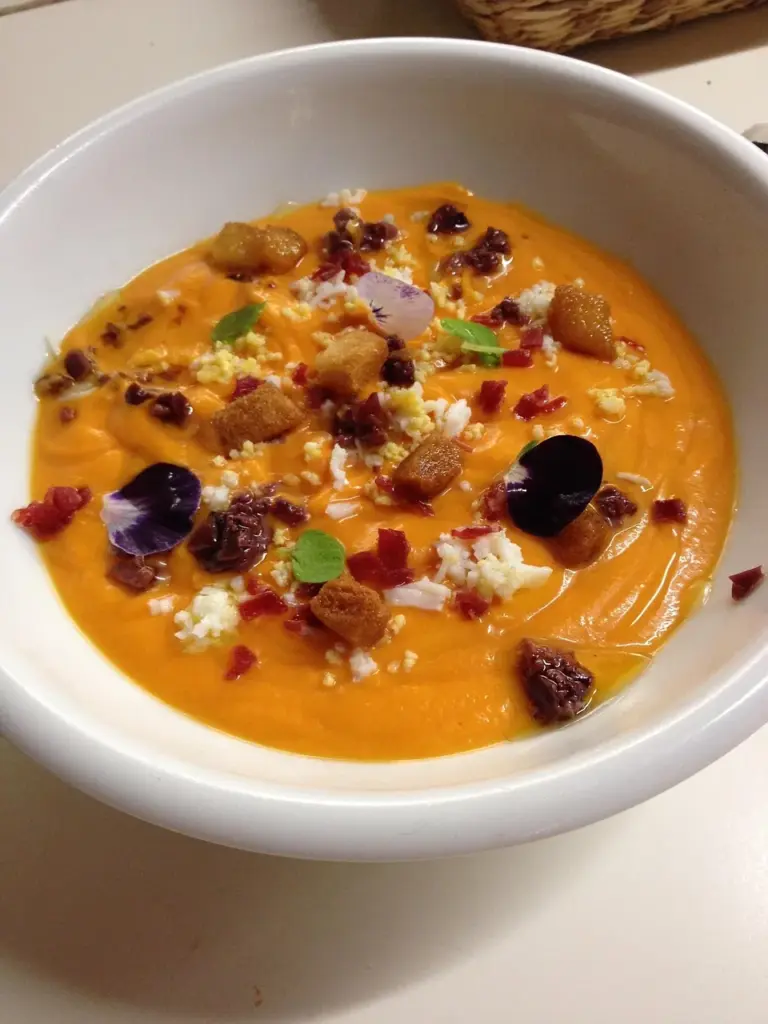
“Salmorejo is a velvety cold soup originating from Córdoba, Spain, made with very ripe tomatoes blended with stale bread, garlic, sherry vinegar, and emulsified extra virgin olive oil. It is worth preparing on hot days because it is a fresh, full-bodied meal finished with pieces of hard-boiled egg and dry-cured ham.”
What you need to know
- Choose very ripe, red, and fleshy tomatoes (such as pear or débora types) to provide vivid color and natural sweetness.
- Let the stale bread absorb the juice of the blended tomatoes for a few minutes before emulsifying the olive oil.
- Pour the olive oil in a steady stream with the blender running to create a thick, silky, and creamy emulsion.
Ingredients
Main
- 600g ripe tomatoes
- 150g of stale bread
- 100ml of olive oil
- 2 tablespoons sherry vinegar
- Salt to taste
- 1 boiled egg (for garnish)
- 50g of Iberian ham (for garnish)
Instructions
Principal
- First, wash the tomatoes well and cut them in half.
- In the blender, add the chopped tomatoes, bread, olive oil, vinegar, and salt.
- Beat everything until you get a smooth and homogeneous cream.
- Taste and adjust salt if necessary.
- Leave the mixture in the refrigerator for at least 30 minutes before serving.
- Meanwhile, prepare the boiled eggs and chop the ham.
- When serving, place the salmorejo in bowls.
- Decorate with pieces of hard-boiled egg and Iberian ham on top.
Chef's tips
- Do not add water to the preparation; all the moisture of the cream must come exclusively from the pulp of fresh tomatoes.
- Serve strictly well chilled, keeping the mixture in the refrigerator for at least 1 hour before bringing to the table.
- Use extra virgin olive oil with a mild fruity flavor so that the oil does not make the cream excessively bitter.
Variations
- Salmorejo with beet: add half a cooked beet to the tomatoes to create a striking purple hue and earthy notes.
- Strawberry salmorejo: replace one-third of the tomatoes with fresh ripe strawberries for a fruity and refreshing version.
- Touch with tuna and apple: garnish with tuna flakes in olive oil and cubes of tart green apple.
Substitutions
- Sherry vinegar: use good quality red wine vinegar, mild apple cider vinegar, or strained lemon juice.
- Stale bread with a hard crust: use day-old Italian bread, stale baguette, or sourdough bread without seeds.
- Iberian ham: replace with sliced jamón serrano, national raw ham, or crispy cubes of toasted bacon.
How to store
Store the salmorejo without the garnishes in a glass bottle or covered bowl in the refrigerator for up to 3 days. Mix vigorously with a wire whisk before serving to reincorporate any slight separation of the olive oil.
Can it be frozen?
It is not recommended to freeze salmorejo, as the freezing process breaks the olive oil emulsion and alters the velvety texture of the blended bread. Always prepare for fresh and refrigerated consumption.
What to serve with
Serve in deep bowls decorated with pieces of chopped boiled egg, thin slices of raw ham, and a drizzle of extra virgin olive oil on top. Serve with crispy croutons, raw vegetable sticks, or glasses of well-chilled dry white wine.
Frequently asked questions
How to remove the skin and seeds from tomatoes easily?
You can blend the whole ripe tomatoes and pass the mixture through a fine sieve before adding the bread and olive oil, eliminating seeds and fibers.
What is the fundamental difference between gazpacho and salmorejo?
Gazpacho takes cucumber, bell pepper, and water resulting in a liquid soup to drink; the salmorejo takes only tomato, garlic, plenty of bread, and olive oil, forming a dense cream to eat with a spoon.
The cream became too liquid, what can I do?
Add more soaked stale breadcrumbs and continue beating with olive oil until the desired firm and velvety consistency is reached.
Why should it be served cold?
The low temperature highlights the aromatic freshness of the tomatoes, reduces the astringency of the olive oil, and makes the creamy texture much more pleasant to the palate.
You might also like