- Prep
- 25 min
- Cook
- 40 min
- Total time
- 65 min
- Yield
- 4 servings
- Difficulty
- Medium
- Calories
- 400 kcal
Quick summary
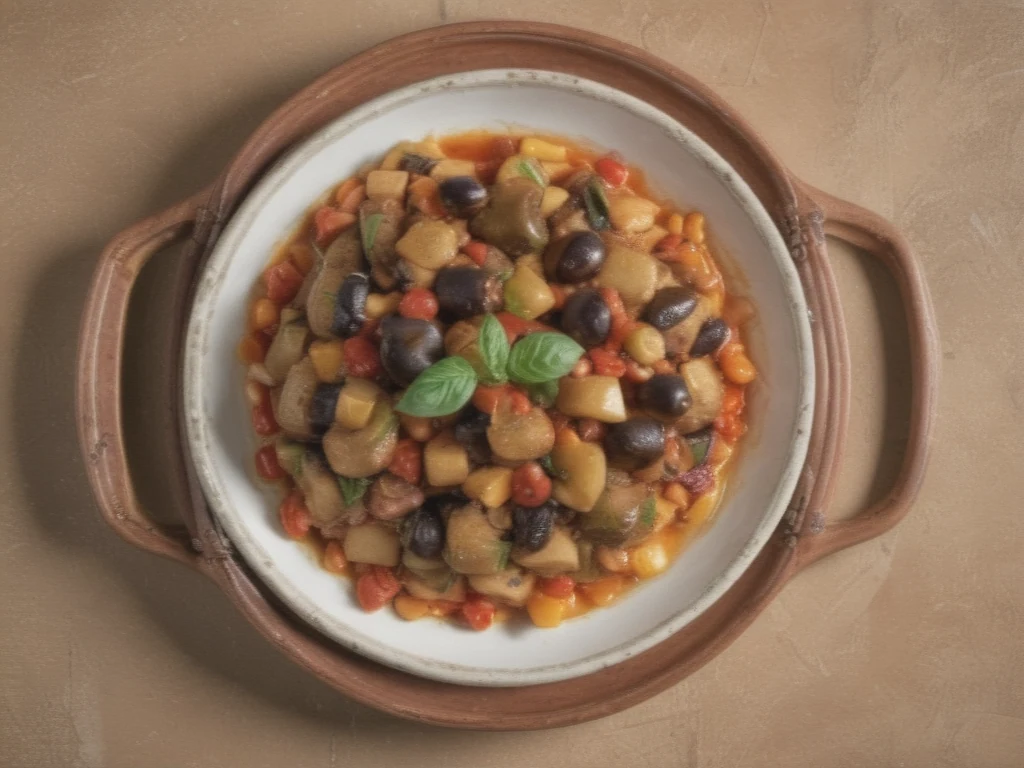
“A monumental classic from Sicily, caponata harmonizes fried eggplant cubes with crunchy celery, green olives, and capers. The sweet and sour tomato sauce with vinegar seals the Italian flavor.”
What you need to know
- Salting and drying the eggplant: salting for 30 minutes in a sieve drains bitter liquids and prevents it from soaking in the olive oil.
- Cooking in separate stages: frying the eggplant and sautéing the celery separately preserves the individual textures of each vegetable.
- Bittersweet balance: mixing red wine vinegar with sugar defines the Sicilian authenticity.
Ingredients
Main
- kg Large eggplant
- unit Large onion
- units Celery stalks
- g Canned peeled tomatoes (chopped)
- g Pitted green olives
- tablespoons Capers (drained and rinsed)
- ml Red wine vinegar
- tablespoons Açúcar
- maço Fresh basil
- ml Extra virgin olive oil
- Sal grosso
- Freshly ground black pepper
Instructions
Principal
- Wash the eggplants, cut them into cubes of approximately 2-3 cm. Place them in a sieve, sprinkle generously with coarse salt, and let rest for 30 minutes. This process helps remove bitterness and excess water. Meanwhile, chop the onion and celery into small cubes and prepare the other ingredients to have everything at hand. Organize your workspace to optimize cooking time.
- After resting, rinse the eggplants well under running water to remove the salt and dry them carefully with paper towels. The professional technique is: a dry eggplant fries better and absorbs less oil. In a large, deep pan or skillet, heat the olive oil over medium heat. Fry the eggplants in batches until golden and soft. Remove and reserve on paper towels to drain excess oil. This will ensure an ideal texture.
- In the same pan, add a little more olive oil if necessary. Sauté the chopped onion until translucent, for about 5-7 minutes. Then, add the celery and cook for another 5 minutes, until both are tender but not browned. This step is crucial to build caponata's aromatic base. Keep the heat medium to avoid burning the vegetables.
- Add the chopped peeled tomatoes (with the juice), green olives, and drained capers. Mix well and season with salt and freshly ground black pepper. Let the sauce reduce over low heat for about 15 minutes, stirring occasionally. The secret of this recipe is to allow the flavors to harmonize slowly, creating depth and complexity. The consistency should be thick.
- In a small bowl, mix the red wine vinegar with the sugar until dissolved. Add this sweet and sour mixture to the pan with the sauce and stir. Cook for another 5-10 minutes, allowing the vinegar to evaporate a little and the flavors to integrate perfectly. Taste and adjust the salt, pepper, or the sweet and sour ratio according to your palate. A little more sugar or vinegar may be needed, depending on the sweetness of the tomatoes.
- Finally, add the reserved fried eggplants to the sauce. Stir gently so as not to break the eggplant cubes. Remove from heat and mix in the coarsely chopped fresh basil leaves. Let the caponata rest in the pot for at least 30 minutes before serving, or, ideally, take to the refrigerator for a few hours or overnight. This allows the flavors to deepen even further. Serve at room temperature or cold.
Chef's tips
- Rinse the eggplant well after salting and dry vigorously with paper towels before placing in very hot olive oil.
- Blanch the chopped celery stalks for 2 minutes in boiling water before sautéing to ensure a soft and crispy bite.
- Let the caponata rest in the refrigerator for 12 hours before serving; resting is the key to the infusion of flavors.
Variations
- Addition of toasted pine nuts: add two tablespoons of pine nuts toasted in a dry skillet at the end of the caponata.
- Touch of raisins: incorporate dark raisins hydrated in warm water into the sweet and sour tomato and vinegar sauce.
- Oven-baked version: bake the eggplant cubes with olive oil at 200 °C on a baking sheet instead of frying them on the stovetop.
Substitutions
- Common eggplant: use Japanese eggplant, which is sweeter and has fewer seeds, or striped Zebrina-type eggplant.
- Red wine vinegar: replace with mild white wine vinegar or good quality artisanal apple cider vinegar.
- Canned capers: use salted capers previously desalted in running water for 15 minutes.
How to store
Keep in an airtight glass jar in the refrigerator for up to 7 days. The vinegar and olive oil sauce acts as a natural preservative, making the caponata more appetizing and complex in flavor each day.
Can it be frozen?
Freeze the ready-made caponata in glass jars or proper bags for up to 3 months. Thaw in the refrigerator for 24 hours and serve at room temperature with a drizzle of extra virgin olive oil.
What to serve with
Serve over toasted slices of rustic Italian bread or rosemary focaccia, as an appetizer alongside pecorino cheese and cured salami, or as a garnish for grilled fish fillets.
Frequently asked questions
Can I substitute canned peeled tomatoes with ready-made boxed sauce?
Not recommended; canned peeled tomatoes bring clean acidity and pulp chunks necessary for the rustic texture of the preserve.
Is celery mandatory in the traditional recipe?
Yes, celery is indispensable in authentic Sicilian caponata, offering the classic crunchy contrast against the softness of the eggplant.
Does eggplant absorb a lot of olive oil during preparation?
The previous process of salting and drying removes air from the vegetable cells, significantly reducing fat absorption during frying.
Why should caponata be served at room temperature?
The cooling accentuates the sweet and sour balance of the vinegar with the sugar and allows the aromas of the olive oil and basil to fully express themselves.
You might also like