- Prep
- 25 min
- Cook
- 35 min
- Total time
- 60 min
- Yield
- 4 servings
- Difficulty
- Medium
- Calories
- 520 kcal
Quick summary
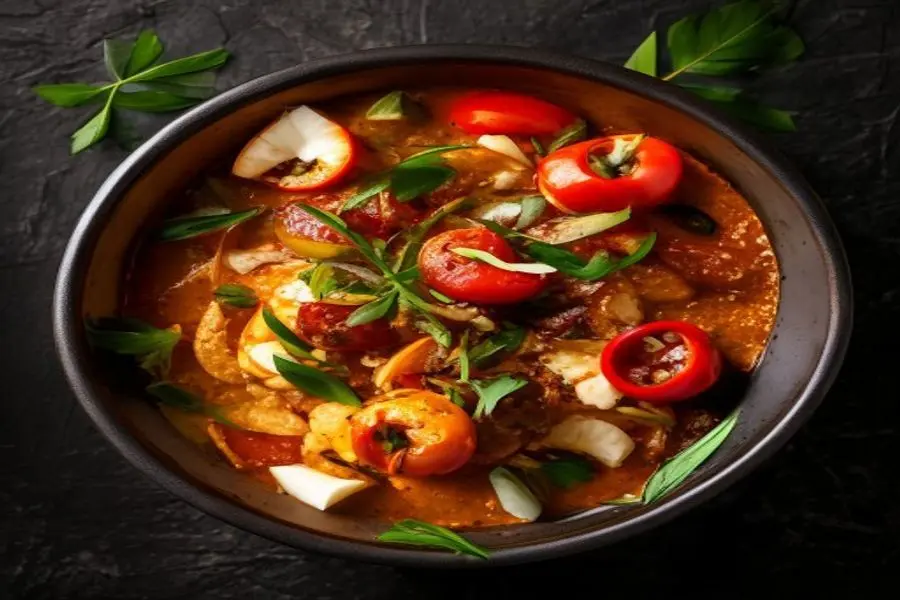
“Inspired by Thai cuisine, this curry combines aromatic red paste, full-bodied coconut milk, and shrimp cooked to perfection. The dish brings a striking balance between spiciness and freshness.”
What you need to know
- Pre-frying the paste: sautéing the paste in coconut oil for 2 to 3 minutes releases the essential aromatic oils.
- Quick shrimp cooking: keeping the seafood in the broth for only 2 to 3 minutes prevents a rigid texture.
- Citrus harmony: kaffir lime leaves and fresh juice balance the natural sweetness of the coconut milk.
Ingredients
Main
- tablespoons Thai Red Curry Paste
- tablespoons Coconut oil
- ml (1 can) Full-fat coconut milk
- cup Chicken or vegetable broth
- grams Medium shrimp, peeled and cleaned
- cup Thai basil leaves (or common basil)
- units Kaffir lime leaves (fresh or frozen)
- unit Red bell peppers, in thin strips
- unit Red onion, thinly sliced
- grams Mushrooms (shiitake or button), sliced
- teaspoon Palm sugar (or brown sugar)
- tablespoons (to taste) Fish sauce (nam pla)
- tablespoon Lemon juice (tahiti or sicilian)
- Cooked jasmine rice for serving
Instructions
Principal
- Heat the coconut oil in a wok or large skillet over medium heat. Add the red curry paste and sauté for 2-3 minutes, stirring constantly. This step releases the aromas of the paste, creating an indispensable aromatic base for the dish.
- Pour the coconut milk, broth, and kaffir lime leaves into the pot. Mix well and bring to a gentle simmer. Reduce heat and cook for 5-7 minutes, allowing the flavors to incorporate deeply into the sauce.
- Add the red onion slices, bell pepper, and mushrooms to the sauce. Cook for another 3-5 minutes, or until the vegetables are soft but still crunchy. Keep the sauce over low heat to avoid overcooking the vegetables.
- Add the shrimp to the pan. Cook for only 2-3 minutes, or until they are pink and opaque. The most common mistake is overcooking the shrimp, leaving it rubbery and without the desired texture.
- Season with palm sugar and fish sauce. Taste and adjust the seasoning according to your personal palate. If necessary, add more fish sauce for salinity or sugar to balance the flavor profile.
- Finish with the lime juice and Thai basil leaves. Stir gently and remove from heat immediately. The most important tip is not to boil the basil, to preserve its freshness and characteristic aroma.
Chef's tips
- Tear the kaffir lime leaves with your fingers before putting them in the pot to intensify the perfumed oils in the broth.
- Add the basil leaves only after turning off the heat so as not to darken the herbs or lose aroma.
- Use full-fat canned coconut milk without thickening additives for the typical Thai velvety sauce.
Variations
- Extra vegetables: add small broccoli florets, zucchini strips, or snow peas along with the mushrooms.
- Heat adjustment: reduce the curry paste to 1 tablespoon if you prefer a milder, sweeter sauce.
- Seafood mix: add cleaned squid rings and mussels at the same cooking stage as the shrimp.
Substitutions
- Shrimp: substitute with chicken breast cubes cooked for 8 minutes in the sauce or slices of drained firm tofu.
- Palm sugar: use brown or demerara sugar in the same measure indicated to sweeten the broth without altering the texture.
- Fish sauce: swap for traditional soy sauce with a pinch of salt in alternative preparations.
How to store
Armazene em recipiente hermético na geladeira por até 2 dias. Aqueça em panela sobre fogo brando até iniciar fervura branda, mexendo devagar para não desmanchar os camarões nem talhar o molho.
Can it be frozen?
Freezing is not recommended. Coconut milk loses its silky consistency and tends to curdle during thawing, and the shrimp meat loses juiciness, becoming fibrous and lacking texture.
What to serve with
Serve traditionally over steamed jasmine rice, simple basmati rice with cilantro leaves, or warm naan bread to soak up the velvety sauce from the bottom of the dish.
Frequently asked questions
Should kaffir lime leaves be eaten?
No, the kaffir lime leaves are only used to flavor the broth during simmering and should be removed before eating.
How to soften the dish if it gets too spicy?
Add another 100 ml of full-fat coconut milk and half a teaspoon of palm sugar to balance the heat without masking the spices.
Can frozen shrimp be used in the recipe?
Yes, thaw them beforehand in the refrigerator and pat the shrimp dry with paper towels so they don't release excess water into the sauce.
What is the best alternative to Thai basil?
Common fresh Italian basil replaces satisfactorily; just place the whole leaves turning off the heat to release their natural oils.