- Prep
- 20 min
- Cook
- 30 min
- Total time
- 50 min
- Yield
- 4 servings
- Difficulty
- EASY
- Calories
- 275 kcal
Quick summary
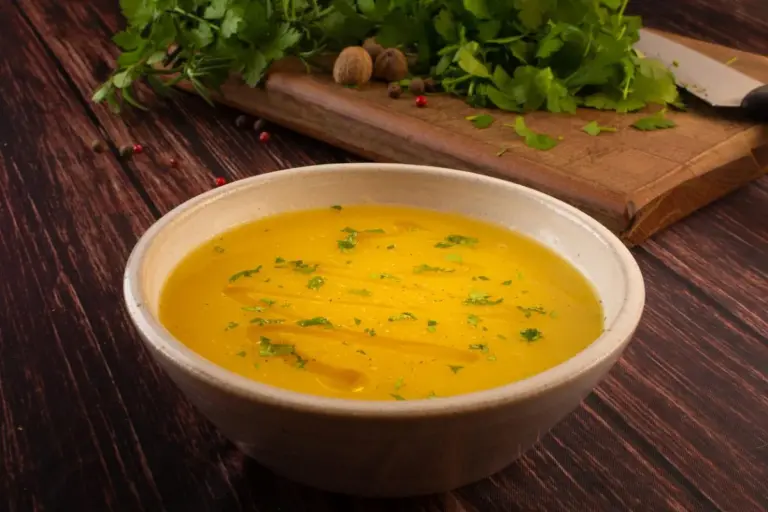
“The creamy kabocha squash soup cooks soft cubes of the vegetable in aromatic broth with onion, garlic, and olive oil before being blended to a velvety texture. Finished with heavy cream and a subtle touch of grated ginger, it delivers thermal comfort for cool days.”
What you need to know
- Butternut squash cooked in vegetable broth concentrates natural sugars and intense yellow-orange color.
- Blending the sauté in a blender or with an immersion blender produces a uniform emulsion without residual fibrous pieces.
- The heavy cream added at the end gives a silky shine and softens the earthy notes of the pumpkin.
Ingredients
Main
- 1 kg of Kabocha squash peeled and cut into cubes
- 1 medium onion, chopped
- 2 cloves garlic, minced
- 1 liter of vegetable broth
- 200 ml of heavy cream
- 2 tablespoons olive oil
- Salt and black pepper to taste
- 1 teaspoon of grated ginger (optional)
Instructions
Principal
- In a large pot, heat the olive oil over medium heat.
- Add the onion and garlic, sautéing until they are translucent.
- Add the pumpkin cubes and mix well.
- Add the vegetable broth and let it cook until the pumpkin is soft, about 20 minutes.
- Turn off the heat and let it cool slightly.
- With a blender or immersion blender, beat the soup until a smooth cream is obtained.
- Return the soup to the pot, add the heavy cream and ginger (if using), and mix well.
- Season with salt and black pepper to taste, heating over low heat before serving.
Chef's tips
- Let the soup cool slightly before blending in the blender and remove the center cap of the lid to release steam without pressure.
- Use well-ripened kabocha squash with dark skin to obtain maximum sweetness and a velvety consistency in the soup.
- Add the grated ginger gradually to dose the heat and ensure it complements the flavor without overpowering the squash.
Variations
- Scatter skillet-toasted pumpkin seeds seasoned with salt and paprika over each bowl for crunchy contrast.
- Add 1 teaspoon of freshly grated nutmeg to the heavy cream for classic bistro notes.
- Serve with crumbled gorgonzola or grated parmesan cheese sprinkled over the hot soup in the bowl.
Substitutions
- Kabocha pumpkin can be replaced by red kuri squash, butternut squash, or Japanese pumpkin in the same amount of 1 kg.
- The heavy cream can be replaced by 200 ml of full-fat coconut milk for a lactose-free version.
- Vegetable broth can be swapped for homemade chicken broth or filtered water with fresh herbs.
How to store
Store the soup in a closed airtight container in the refrigerator for up to 4 days. To reheat, place in a pan over low heat, stirring frequently so the heavy cream doesn't curdle or stick to the bottom.
Can it be frozen?
The pumpkin soup freezes perfectly in freezer-safe containers for up to 3 months. Thaw in the refrigerator overnight and heat over low heat, whisking lightly with a whisk to homogenize the cream.
What to serve with
Serve in warm bowls accompanied by slices of rustic Italian bread toasted with olive oil or homemade croutons with herbs. A hard-rind cheese grated at the table also complements perfectly.
Frequently asked questions
Is it necessary to peel the kabocha squash for the soup?
The recipe calls for peeled pumpkin for a pure orange color, but you can cook with the sanitized peel to get more fiber and olive-green tone.
Can heavy cream curdle when boiling in the pan?
Yes, UHT or fresh heavy cream can curdle with intense boiling; add it at the end over minimum heat, just until reheated.
How to peel raw kabocha pumpkin more easily?
Heat the whole pumpkin or in pieces in the microwave for 3 minutes to soften the skin slightly before cutting with a heavy knife.
Can I use vegetable broth in powder or cubes?
You can use bouillon cubes dissolved in hot water, but reduce the added salt, as industrialized broths already contain high sodium content.