- Prep
- 20 min
- Cook
- 30 min
- Total time
- 50 min
- Yield
- 4 servings
- Difficulty
- EASY
- Calories
- 890 kcal
Quick summary
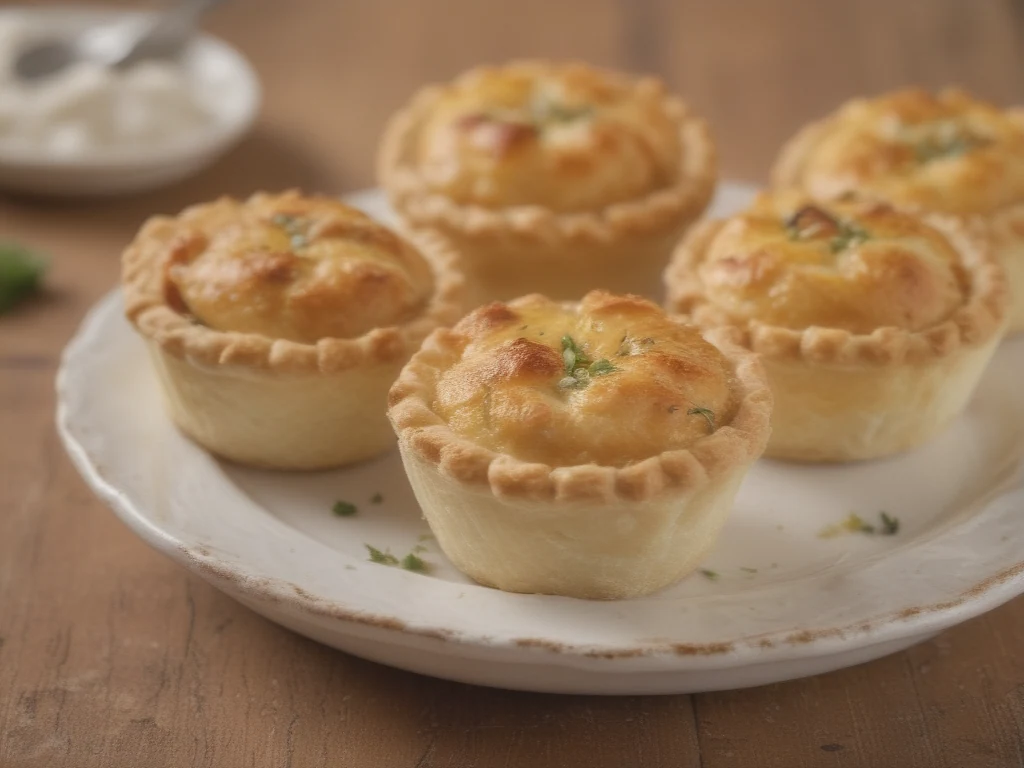
“Supreme classic of Brazilian cuisine, this empada combines the legitimate shortcrust pastry that melts in the mouth with a hearty filling of shredded chicken breast, olives and fresh tomatoes. It is worth preparing at home for the authentic homemade flavor and the crumbly and buttery texture of the dough.”
What you need to know
- A manteiga deve estar bem gelada e ser misturada com as pontas dos dedos para criar a estrutura arenosa que define a massa podre
- Não sove a massa após adicionar a água fria para não desenvolver o glúten, mantendo a textura friável e delicada
- O recheio de frango precisa esfriar totalmente antes de entrar nas forminhas para não derreter a manteiga da base
Ingredients
Main
- Dough: 500g of wheat flour, 250g of cold butter, 1 egg, 1 tablespoon of salt, cold water to taste.
- Filling: 500g of shredded chicken breast, 1 chopped onion, 2 minced garlic cloves, 1 chopped tomato, 1/2 cup of chopped green olives, salt and pepper to taste, green herbs to taste.
Instructions
Principal
- Add the egg and water gradually, until a homogeneous dough forms. Refrigerate for 30 minutes.
- Cook the chicken breast in salted water. After cooked, shred and set aside.
- In a pan, sauté the onion and garlic until golden. Add the shredded chicken, tomato, and olives.
- Season with salt, pepper, and green onions. Reserve the filling.
- Pré-aqueça o forno a 180 graus Celsius.
- Roll out the dough with a rolling pin and line the pie tins.
- Fill with the filling and cover with more dough, sealing the edges well.
- Take to the oven for 30 to 40 minutes, or until golden.
- Let it cool slightly before unmolding.
- Serve hot or at room temperature.
Chef's tips
- Reserve um terço da massa na geladeira para abrir as tampas enquanto forra os fundos e laterais das forminhas de empada
- Pincele uma gema batida na tampa das empadas antes de levar ao forno para garantir uma coloração dourada uniforme
- Espere cerca de 10 minutos após retirar do forno antes de desenformar para que a massa firme e não rache ao toque
Variations
- Acrescente 2 colheres de sopa de requeijão cremoso sobre o recheio de frango antes de fechar a tampa da empada
- Adicione milho-verde cozido ao refogado de frango para trazer doçura e contraste textural ao recheio salgado
- Polvilhe queijo parmesão ralado fininho sobre a tampa pincelada com gema para formar uma crosta crocante
Substitutions
- A manteiga gelada pode ser substituída por banha de porco ou margarina culinária com 80% de lipídios para textura tradicional
- As azeitonas verdes picadas podem ser trocadas por azeitonas pretas chilenas ou palmito picado no mesmo volume
- O peito de frango desfiado pode ser substituído por sobrecoxa de frango desossada e cozida para maior suculência
How to store
Store the baked empadas in an airtight container in the refrigerator for up to 4 days. To consume again, reheat in the oven preheated to 180°C for about 8 to 10 minutes to recover the crumbly texture of the dough.
Can it be frozen?
Empadas can be frozen already baked or raw in the molds for up to 90 days in well-sealed packaging. If they are raw, brush with egg yolk and take directly to the preheated oven at 180°C, increasing the time by 10 minutes.
What to serve with
Pairs masterfully with fresh drip coffee, chilled sugarcane juice, or traditional soda for afternoon snacks. For practical lunches, serve with a leaf salad and vegetable vinaigrette.
Frequently asked questions
How to prevent the filling from making the base of the empada too soggy?
Let the chicken filling dry well in the pan without remaining liquid broth and use it completely cold when assembling in the molds.
Do I need to grease the aluminum molds to bake the empadas?
It is not necessary to grease, as the dough already has a high proportion of butter that prevents it from sticking to the metal molds.
Why did the pie crust turn out tough and elastic instead of flaky and crumbly?
This happens if the dough is kneaded excessively or if the added water is warm; mix only until the ingredients come together without overworking the flour.
What is the ideal point of the dough before going to the refrigerator?
The dough should form a compact and homogeneous ball that does not stick to the hands, yet soft and crumbly to the touch of a finger.
You might also like