- Prep
- 20 min
- Cook
- 30 min
- Total time
- 50 min
- Yield
- 4 servings
- Difficulty
- EASY
- Calories
- 685 kcal
Quick summary
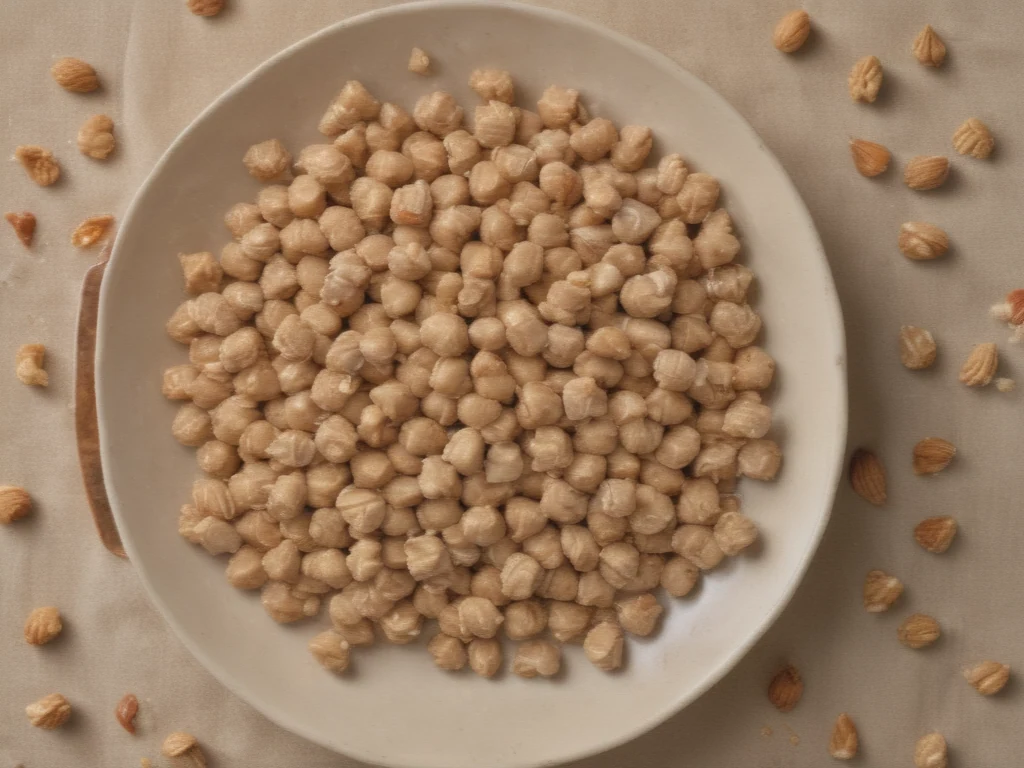
“This homemade paçoca is made with processed roasted peanuts, sugar, cassava flour and a touch of salt. A traditional Brazilian recipe pressed in the mold to obtain firm and soft tablets.”
What you need to know
- The roasted peanuts must be crushed until they release their natural oils, which act as a binder for the flour.
- The toasted cassava flour absorbs excess moisture and provides the typical sandy texture of paçoca.
- Firm compaction with hands or a rolling pin on the baking sheet is a fundamental step so that the block does not crumble.
Ingredients
Main
- 2 cups of roasted and peeled peanuts
- 1 cup sugar
- 1 tablespoon of salt
- 1/2 cup cassava flour
Instructions
Principal
- In the food processor, add the peanuts and process until it becomes a thick paste.
- Add the sugar and salt, and process again until well incorporated.
- Transfer the mixture to a bowl and add the cassava flour, mixing with a wooden spoon until homogeneous.
- Line the pan with parchment paper, pour in the mixture, and press it down well with your hands or a rolling pin.
- Let rest for at least 2 hours at room temperature to set.
- Cut into squares or rectangles and serve.
Chef's tips
- Do not over-process the peanuts so as not to turn them completely into liquid peanut butter.
- Adjust the amount of salt sparingly so it only enhances the flavor without leaving the sweet excessively salty.
- Use a smooth, sharp knife to cut the squares without breaking the edges after resting for 2 hours.
Variations
- Paçoca with chocolate: add two tablespoons of 100% cocoa powder along with the sugar in the food processor.
- Paçoca rolha: shape the mixture by compacting small portions inside clean culinary PVC pipes.
- With cashew nuts: replace half of the roasted peanuts with unsalted roasted cashews.
Substitutions
- The cassava flour can be replaced by fine flaked cornmeal or fine oat flour.
- Refined sugar can be exchanged for brown sugar, demerara sugar, or very finely grated rapadura.
- Peanuts with skin can be used, resulting in paçocas with a darker color and more toasted flavor.
How to store
Store the paçoca tablets in an airtight container lined with paper towels in a cool, dry place for up to 20 days. Keep away from heat sources so that the natural peanut oil does not separate from the dry dough.
Can it be frozen?
Can be frozen in a sealed container with layers separated by sheets of parchment paper for up to 3 months. Thaw at room temperature for 30 minutes inside the closed container to prevent absorbing moisture from the air.
What to serve with
Accompanies fresh drip coffee without sugar to balance the sweetness and fatty density of the peanut. It also combines as a crumbled topping over vanilla ice cream, açaí bowls, or puddings.
Frequently asked questions
Do I need to bake the paçoca after shaping it in the pan?
No, pressed peanut paçoca is a sweet that does not go in the oven; the firmness comes exclusively from compaction and resting.
What is the ideal type of cassava flour for this recipe?
Prefer toasted and very fine white cassava flour (or pass it through a sieve) to provide a delicate texture without hard grains.
Why does the paçoca crumble when trying to cut into slices?
This occurs if the peanut was poorly processed and released little oil or if the dough was not pressed with enough force in the mold.
The recipe calls for 1 tablespoon of salt, isn't it too salty?
It is recommended to use a shallow teaspoon or adjust gradually, as 1 full tablespoon may stand out too much to the palate.