- Prep
- 20 min
- Cook
- 30 min
- Total time
- 50 min
- Yield
- 4 servings
- Difficulty
- EASY
- Calories
- 620 kcal
Quick summary
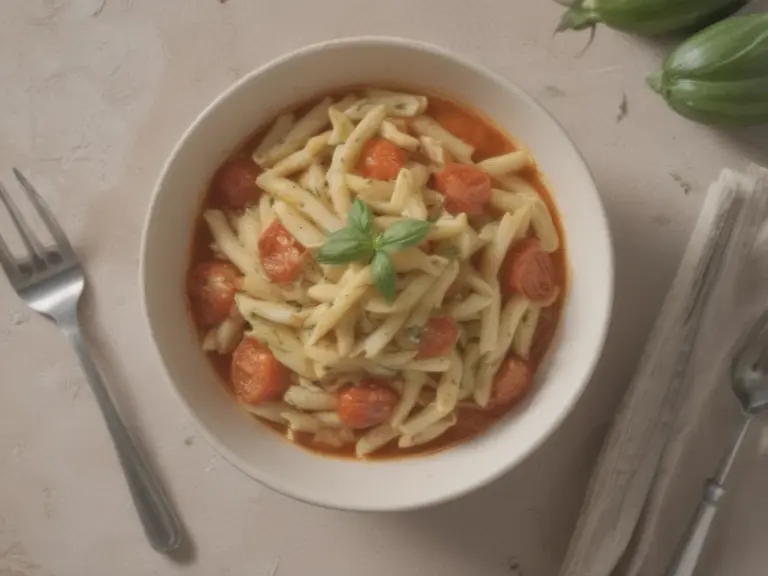
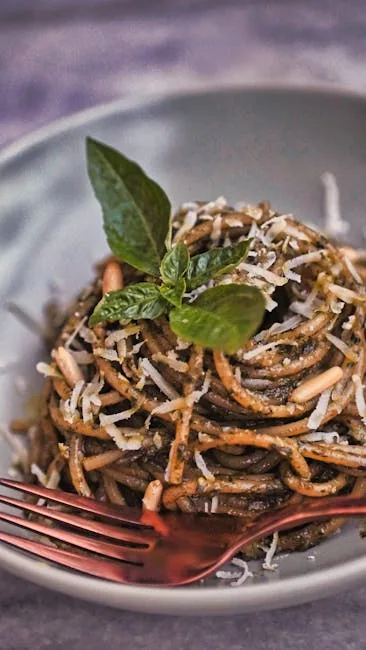
“Pesto alla genovese pasta is an Italian specialty based on basil crushed with pine nuts, parmesan, and olive oil. It is a raw sauce that should not be taken to the heat, keeping the aromatic oils intact and the bright green color of the fresh leaves. The ridges of the penne hold the crushed pieces of nuts and cheese perfectly. When wrapping the hot pasta with the sauce and a ladle of the boiling water in a wide bowl, a satin and uniform coating is achieved in a few minutes.”
What you need to know
- Keep the pesto sauce raw, avoiding the heat of the stove oxidizing the basil and changing the color.
- Cook the pasta al dente to ensure a firm texture that holds up to the density of the olive oil.
- Mix the pesto and pasta in a bowl off the heat, using cooking water to emulsify.
Ingredients
Main
- 300g of penne pasta
- 1 cup fresh basil leaves
- 1/4 cup of pine nuts
- 1/2 cup of grated Parmesan cheese
- 1/2 cup of olive oil
- Salt to taste
- Black pepper to taste
Instructions
Principal
- In a large pot, boil water with a pinch of salt and cook the pasta for approximately 10 minutes, or until al dente.
- While the pasta cooks, prepare the pesto sauce. In a blender, add the basil leaves, pine nuts, parmesan cheese, olive oil, salt, and black pepper.
- Process until a homogeneous mixture is obtained, adjusting the olive oil if necessary for the desired texture.
- After the pasta is cooked, drain it and reserve some of the cooking water.
- Transfer the pasta to a large bowl and add the pesto sauce. Mix well.
- If necessary, use a little of the cooking water to help loosen the dough and integrate the sauce.
- Serve pasta immediately, topping with extra parmesan and fresh basil leaves.
Chef's tips
- Process the basil in pulse mode so the friction of the blade does not heat or darken the chlorophyll.
- Quickly toast the pine nuts in a dry skillet for 2 minutes to enhance the nutty aroma.
- Dry the basil leaves well before blending to prevent residual water from separating the olive oil.
Variations
- Classic pesto with vegetables: cook potato cubes and chopped green beans in the same pasta water.
- Pesto with tomato: add fresh cherry tomatoes cut in half to the bowl before serving.
- Pesto with arugula: use half basil and half arugula leaves for a spicy touch.
Substitutions
- Pine nuts can be replaced with chopped walnuts, raw cashews, or blanched almonds.
- Parmesan cheese can be combined with pecorino romano to intensify the saline content of the sauce.
- Penne can be swapped for fusilli, trofie, or traditional durum wheat spaghetti.
How to store
Store leftovers in an airtight container in the refrigerator for up to 2 days. Consume cold as a salad or warm gently in a light water bath to avoid burning the basil compounds.
Can it be frozen?
Do not freeze the finished dish with the dough. Pesto sauce without the pasta can be frozen in ice cube trays covered with olive oil for up to 90 days at -18°C.
What to serve with
Serve in deep plates, distributing the penne with the shiny sauce. Decorate with fresh basil leaves, grated cheese, and a drizzle of raw extra virgin olive oil.
Frequently asked questions
How to store leftover raw pesto in the refrigerator without oxidizing?
Place the pesto in a sanitized glass and cover the entire surface with a generous layer of olive oil before closing. Olive oil acts as a sealant against oxygen for up to 5 days.
Why did the pesto sauce turn a dark, brownish color?
Basil leaves oxidize quickly when exposed to the heat of the blender motor or the heat of hot pans. Pulse quickly or add an ice cube during grinding.
Should the pesto sauce be heated before serving?
Never take the pesto to direct heat. The sauce should be heated only by the residual heat of the freshly drained pasta when being tossed in the bowl with a little of the cooking water.
Can I replace the pine nuts with other cheaper nuts?
Yes, regular shelled walnuts or cashews are great national substitutes with excellent yield and equivalent fat content to bind the pesto.
You might also like