- Prep
- 20 min
- Cook
- 30 min
- Total time
- 50 min
- Yield
- 4 servings
- Difficulty
- EASY
- Calories
- 815 kcal
Quick summary
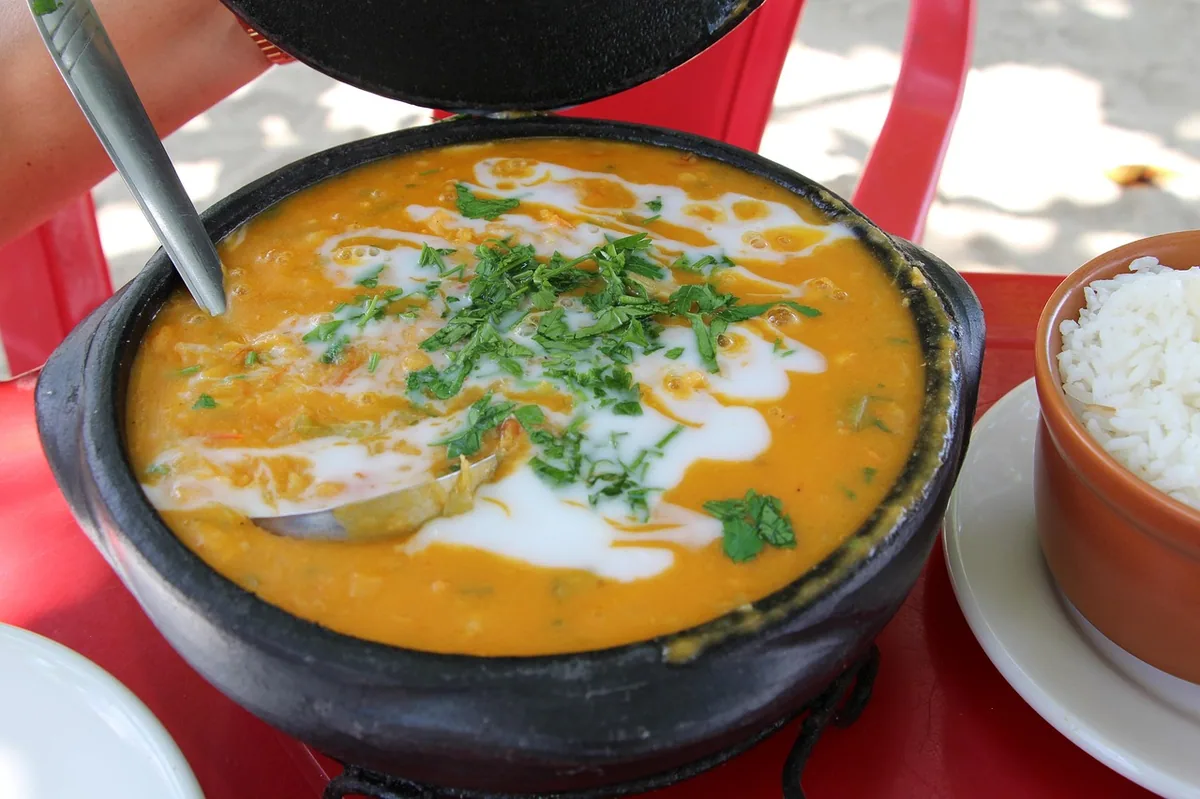
“The Bobó de frango is a classic stew that combines chicken cubes with a thick cream of cassava, coconut milk, and palm oil. It is worth making for the aromatic richness, velvety texture, and welcoming profile typical of Bahian cuisine.”
What you need to know
- Cozimento da mandioca até ficar macia e processamento no liquidificador com a própria água até atingir creme homogêneo
- Douramento dos cubos de frango com cebola, alho amassado e tomate fresco no azeite de dendê perfumado
- Integração do creme de mandioca ao refogado com 400 ml de leite de coco e cozimento final com cheiro-verde fresco
Ingredients
Main
- 1 kg of chicken breast cut into cubes
- 500 g of peeled cassava, cut into pieces
- 1 large onion, chopped
- 3 mashed garlic cloves
- 1 chopped tomato
- 400 ml of coconut milk
- 3 tablespoons of palm oil
- Salt and pepper to taste
- Parsley and chives to taste
Instructions
Principal
- In a pot, cook the cassava in water until it is soft.
- In another pan, heat the palm oil and saute the onion and garlic until golden.
- Add the chicken and tomato, cooking until the chicken is completely cooked through.
- Remove the cassava, drain, and place in the blender with a little of the cooking water.
- Beat until you get a smooth and creamy puree.
- Return the puree to the pot with the chicken and add the coconut milk.
- Mix well until all flavors are incorporated, adjusting salt and pepper.
- Let it cook for a few more minutes and finish with chopped parsley and chives.
Chef's tips
- Retire os cordões fibrosos do centro da mandioca antes de bater para que o creme do bobó fique aveludado e homogêneo
- Adicione a água do cozimento da raiz aos poucos no liquidificador para controlar a densidade do purê de mandioca
- Refogue o alho e a cebola no azeite de dendê em fogo moderado para extrair sabor e cor sem queimar o óleo
Variations
- Bobó de frango picante adicionando uma pimenta-dedo-de-moça sem sementes bem picadinha junto ao refogado inicial de alho
- Bobó com gengibre acrescentando uma colher de chá de gengibre fresco ralado para trazer calor e frescor cítrico ao molho
- Bobó com leite de coco light reduzindo calorias totais sem abrir mão da textura cremosa típica da receita
Substitutions
- A mandioca fresca pode ser substituída por inhame cozido, mandioquinha (batata-baroa) ou abóbora cabotiá
- O frango em cubos pode ser substituído por camarões limpos frescos, lascas de bacalhau dessalgado ou palmito pupunha
- O azeite de dendê pode ser substituído parcialmente por azeite de oliva extravirgem caso prefira notas menos acentuadas
How to store
Store the cold bobo in an airtight container in the refrigerator for up to 3 days. When reheating in a pan over low heat, add a little water or coconut milk to restore the creamy consistency without sticking to the bottom.
Can it be frozen?
The chicken bobó can be frozen in individual portions in airtight containers for up to 60 days. To defrost, leave in the refrigerator overnight and heat slowly in the pot, stirring frequently with a wooden spoon.
What to serve with
Serve traditionally garnished with steamed white rice, very crispy butter farofa, and fresh lemon slices. A malagueta pepper or pimenta-de-cheiro sauce served on the side complements the experience.
Frequently asked questions
Can I use regular olive oil instead of palm oil?
You can use it, but palm oil is the fundamental element that gives the orange color and authentic aroma to the bobó.
Does the chicken breast not dry out when cooking in the bobó?
As the chicken browns with the tomatoes and then simmers enveloped in the protective cream of cassava and coconut milk fats, the meat maintains its juiciness.
At what point in the cooking should the coconut milk be added?
The coconut milk is added after combining the golden chicken with the cassava cream, simmering over low heat for a few minutes to incorporate.
How to achieve the correct texture of the cassava cream?
Beat the freshly cooked cassava with part of the boiling water until it forms a thick and smooth puree, without apparent pieces or lumps.