- Prep
- 20 min
- Cook
- 30 min
- Total time
- 50 min
- Yield
- 4 servings
- Difficulty
- EASY
- Calories
- 390 kcal
Quick summary
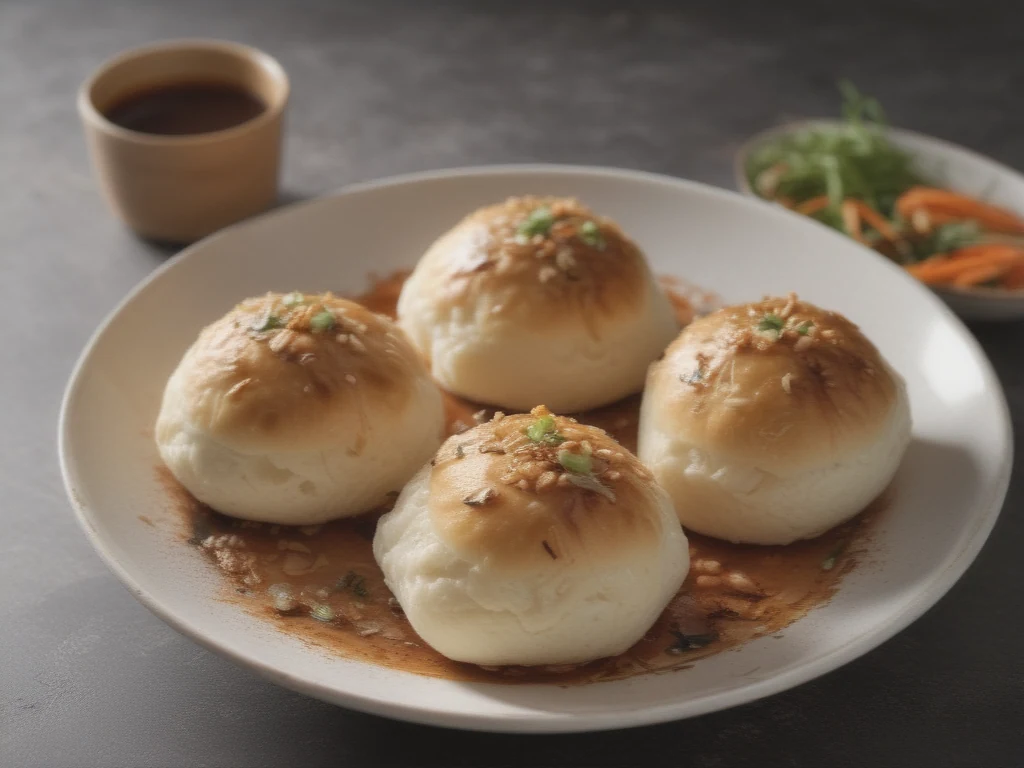
“This classic Chinese bao bun combines soft steamed fermented dough with a savory filling of ground pork sautéed with garlic, onion, and ginger. A fluffy, aromatic, and comforting oriental snack.”
What you need to know
- The 10-minute kneading develops the gluten, allowing the dough to retain gases and rise airy from the steam.
- The 1-hour rest time ensures proper fermentation generating an airy crumb and soft spongy texture.
- The sealed closure of the circles prevents the moisture of the filling from escaping, moistening the dough on the outside.
Ingredients
Main
- Dough:
- 2 cups all-purpose flour
- 1 tablespoon of sugar
- 1 teaspoon dry active yeast
- 1/2 teaspoon salt
- 1/2 cup of warm water
- 1 tablespoon of oil
- Filling:
- 300g of ground pork
- 2 tablespoons of soy sauce
- 1 chopped onion
- 1 clove of garlic, minced
- 1 tablespoon of grated ginger
Instructions
Principal
- In a bowl, mix the flour, sugar, baking powder, and salt.
- Add the warm water and oil, and mix until a dough forms.
- Knead the dough for about 10 minutes until smooth and elastic.
- Cover the dough with a cloth and let it rest for 1 hour, or until it doubles in volume.
- While the dough rests, prepare the filling: sauté the onion, garlic, and ginger in a pan.
- Add the ground pork and cook until golden.
- Add the soy sauce and cook for 3 more minutes.
- Divide the rested dough into small portions and roll out into circles.
- Place a spoonful of the filling in the center of each circle and fold the dough, closing well.
- Place the baos in the steamer lined with parchment paper and let rest for 15 more minutes.
- Steam for 15 minutes until they are soft and cooked.
- Serve hot with sauces to taste.
Chef's tips
- Cut small squares of parchment paper to accommodate each bun inside the steamer without sticking.
- Let the buns rest for 15 minutes already shaped in the steamer before turning on the stove flame.
- Do not open the steamer lid during the 15 minutes of cooking to avoid thermal shock and wilting the dough.
Variations
- Vegetarian Bao: replace the filling with shiitake mushrooms sautéed with Chinese cabbage and sliced carrots.
- Sweet bun: fill the dough with sweetened red azuki bean paste or apple cinnamon jam.
- Open bao (Gua Bao style): shape the dough into a folded semicircle and fill after steaming.
Substitutions
- Ground pork can be replaced by shredded cooked chicken breast or ground beef.
- Dry biological yeast can be replaced by 15 grams of fresh biological yeast dissolved in water.
- The white sugar in the dough can be replaced by demerara sugar or granulated sugar in the same spoon.
How to store
Store the already cooked and cold rolls in an airtight container in the refrigerator for up to 4 days. To consume again, reheat in a steamer over boiling water for 4 minutes or wrap in a damp paper towel in the microwave.
Can it be frozen?
You can freeze the steamed breads individually in airtight bags for up to 3 months. To reheat, take them straight from the freezer to the steamer over boiling water for 8 minutes until they are soft.
What to serve with
Serve hot with hoisin sauce, aromatic chili oil with toasted sesame, and sweet and sour Japanese cucumber pickles. Harmonizes with traditional hot oolong tea or iced green tea with lemon slices.
Frequently asked questions
Can I bake bao bread in a conventional oven?
Baking in the oven creates a golden and crispy crust typical of common bread; for the white and soft finish, steam it.
Why did the bao buns wilt and wrinkle when opening the steamer?
Opening the lid abruptly causes thermal shock; turn off the heat and wait 3 minutes before lifting the steamer lid.
How to ensure the meat filling doesn't release too much water?
Sauté the meat until browned and all the liquid has evaporated from the pan before incorporating the soy sauce and filling the dough.
Does the dough need double rest in this recipe?
Yes, the first rest doubles the volume of the dough and the second 15-minute fermentation after shaping ensures a fluffy crumb.