- Prep
- 20 min
- Cook
- 30 min
- Total time
- 50 min
- Yield
- 4 servings
- Difficulty
- EASY
- Calories
- 810 kcal
Quick summary
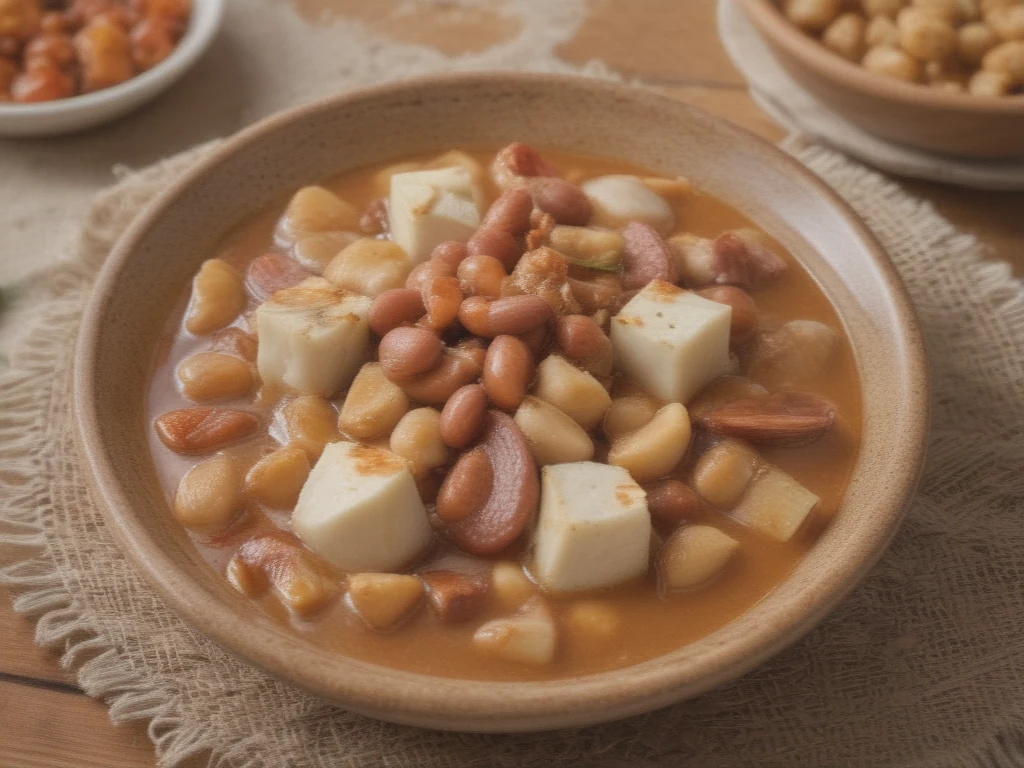
“Fabada asturiana is one of the most traditional stews in Spain, cooking large white beans over low heat with Spanish chorizo, smoked blood sausage, bay leaf, and sweet paprika. It is worth making to savor a robust winter dish, where the sausages enrich the thick broth and leave the grains with a buttery texture.”
What you need to know
- Let the white beans soak in plenty of cold water for 12 hours to soften the grains and reduce cooking time.
- Lightly brown the chorizo and blood sausage cut into large pieces along with the onion and garlic sauté to release the aromatic fat.
- Cook over low heat for about 90 minutes, shaking the pot by the handles instead of stirring with a spoon so as not to break the beans.
Ingredients
Main
- 500g of white beans (soak for 12 hours)
- 200g Spanish chorizo (or cured pork sausage)
- 200g of black pudding (or sausage)
- 1 medium onion, chopped
- 2 cloves garlic, minced
- 2 bay leaves
- 1 tablespoon of sweet paprika
- Salt and pepper to taste
- 2 liters of beef broth
Instructions
Principal
- Drain the beans that were soaking and set aside.
- In a large pan, heat a drizzle of olive oil and sauté the onion and garlic until they are transparent.
- Add the chorizo and blood sausage cut into pieces and let it brown a little.
- Add the beans, bay leaves, and paprika. Mix well.
- Pour in the beef broth and bring to a boil.
- After boiling, lower the heat and cook for approximately 90 minutes, until the beans are soft.
- Taste and adjust the salt and pepper if necessary.
- Let it rest for 10 minutes before serving.
Chef's tips
- In case the broth reduces too much during slow cooking, add cold water little by little to lower the boil ('asustar las fabas'), which helps to soften the bean skin.
- Be careful with the initial salt, as smoked sausages release abundant sodium throughout the long cooking process.
- Let the fabada rest for 10 to 15 minutes with the heat off before serving to settle the fat and thicken the sauce.
Variations
- Fabada with pork ribs: add 200g of salted or smoked pork ribs, desalted, along with the sausages.
- Version with bacon: add a piece of cured pork belly (pancetta) during cooking to enhance the creaminess of the broth.
- Touch of saffron: dissolve some true saffron pistils in warm water and add to the broth to provide golden color and floral note.
Substitutions
- Spanish chorizo: use thick sliced smoked paio, good quality cured calabresa sausage, or Portuguese sausage.
- Blood sausage: replace with Brazilian blood sausage or well-smoked Blumenau sausage.
- White beans: use large butter beans, cannellini beans, or hydrated white fava beans.
How to store
Store in an airtight container in the refrigerator for up to 4 days; the flavor of the fabada improves the day after preparation. Reheat in a heavy-bottomed pot over low heat, adding a little broth if necessary.
Can it be frozen?
You can freeze in proper containers with the broth covering the beans for up to 90 days without losing quality. Thaw in the fridge for 24 hours and reheat slowly over low heat, shaking the pan until bubbling.
What to serve with
Serve very hot in deep plates or clay bowls accompanied by slices of rustic thick-crust bread to dip in the sauce. Pairs perfectly with well-chilled natural cider or a young, full-bodied red wine.
Frequently asked questions
How to make the broth very thick and creamy?
Remove a ladle of cooked beans with a little broth, mash them with a fork until they form a puree, and return to the pot in the last 15 minutes.
Can I make the fabada asturiana in the pressure cooker?
You can, reducing the time to about 35 to 40 minutes after pressure; however, traditional cooking in an open pan ensures better control of the integrity of the grains.
Do I need to remove the excess fat from the surface?
Yes, if you prefer a less heavy dish, use a ladle to remove the layer of reddish oil that rises to the surface halfway through cooking.
Why shouldn't you stir the fabada with a metal spoon?
The friction of the spoon breaks the fragile shells of the cooked grains and breaks down the blood sausage; gently shake the pan by the handles to mix.