- Prep
- 20 min
- Cook
- 30 min
- Total time
- 50 min
- Yield
- 4 servings
- Difficulty
- EASY
- Calories
- 670 kcal
Quick summary
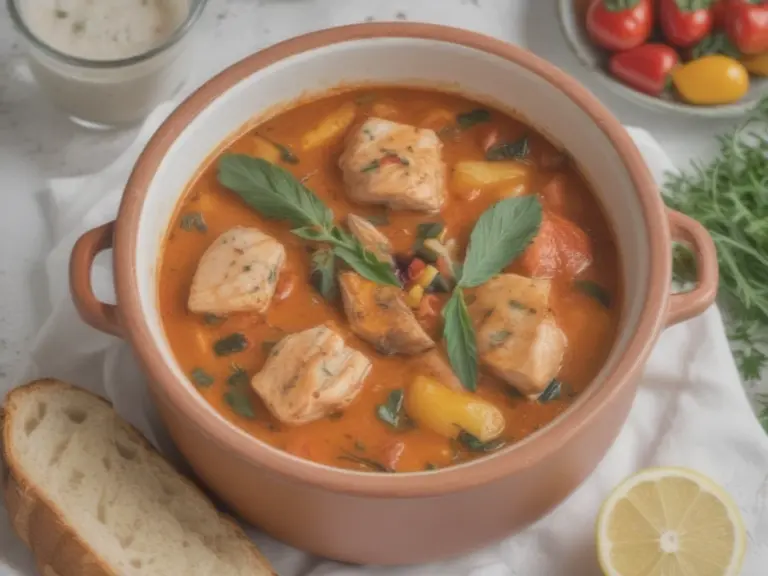
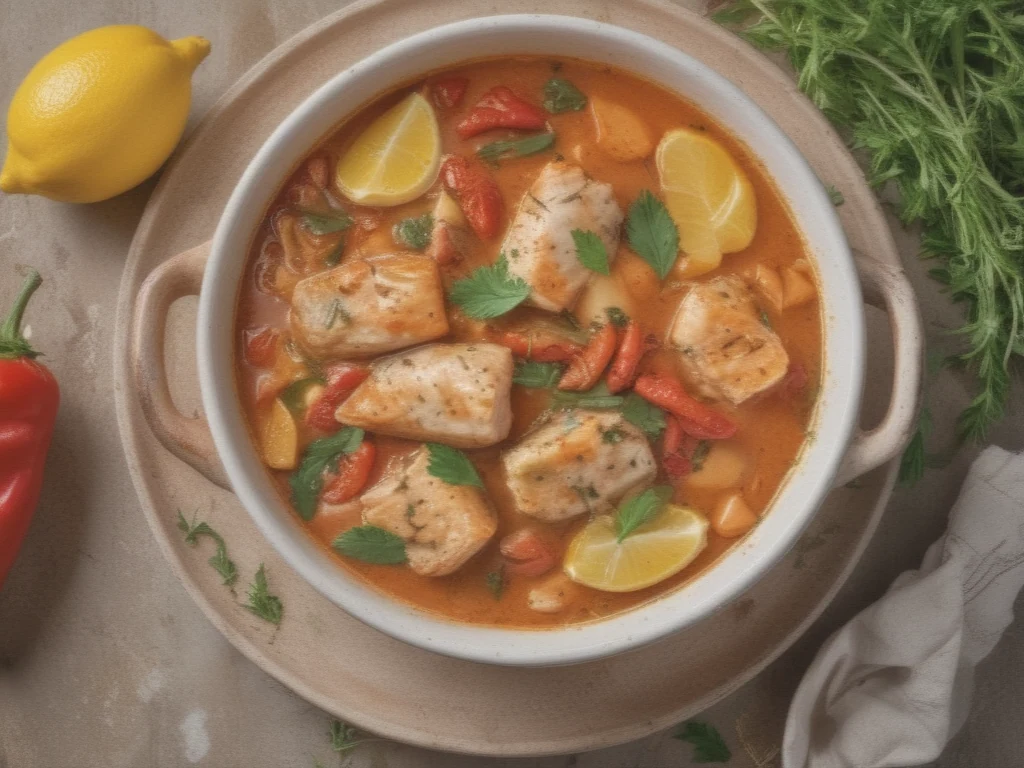
“Traditional Bahian Moqueca prepared with firm fish steaks and cleaned shrimp cooked in layers of onion, bell peppers, coconut milk, and palm oil. A full-bodied dish with striking aromas, perfect for special weekend lunches.”
What you need to know
- The short 15-minute marinade with lemon softens the fish without breaking the meat due to acidity.
- The layered assembly of vegetables protects the fish steaks from excessive heat from the bottom of the pan.
- The palm oil with garlic at the beginning provides the aromatic base and the characteristic color of the Moqueca.
Ingredients
Main
- 1 kg fish steaks (sea bass or grouper)
- 500g of cleaned shrimp
- 2 large onions sliced
- 2 large tomatoes sliced
- 1 red bell pepper, sliced
- 1 sliced green bell pepper
- 200 ml of coconut milk
- 100 ml of palm oil
- 2 cloves garlic, minced
- Juice of 1 lemon
- Salt and pepper to taste
- Fresh cilantro to taste
- If you prefer, add chili pepper for a spicy touch.
- Let the moqueca rest for a few minutes before serving so the flavors intensify.
- Sirva com arroz branco e farofa para uma refeição completa.
- Coconut milk can be replaced by heavy cream for a creamier version.
- Use firm fish so they don't fall apart during cooking.
Instructions
Principal
- In a bowl, season the fish and shrimp with salt, pepper, and lemon juice. Set aside for 15 minutes.
- In a large pot, heat the dendê oil and sauté the garlic until golden.
- Add the onions and sauté until wilted.
- Add the bell peppers and tomatoes, stirring well to incorporate.
- Place the fish steaks in the pot, followed by the shrimp.
- Pour the coconut milk over the ingredients and cook over low heat.
- Cook for approximately 40 minutes, until the fish is cooked and the flavors are well blended.
- Finish with chopped fresh cilantro and adjust salt if necessary.
Chef's tips
- Use a clay pot or a thick-bottomed cast iron pot to distribute the heat evenly.
- Keep the pot always covered on low heat and do not stir with a spoon so as not to break the fish.
- Add the shrimp only in the final minutes of cooking if you prefer a softer texture.
Variations
- Add thin slices of deseeded chili pepper to impart pronounced spiciness to the sauce.
- Add 100g of ground cashews to the broth to provide density and a touch of vatapá.
- Prepare a mixed version by adding cleaned squid rings and mussels along with the shrimp.
Substitutions
- The sea bass or grouper can be replaced by sliced dogfish, grouper, yellowtail snapper, or weakfish.
- The dendê oil can have the dose reduced to half, completing the rest with mild olive oil.
- Fresh cilantro can be replaced with chopped fresh parsley and chopped green onions.
How to store
Store leftovers in a glass jar with an airtight seal in the refrigerator for up to 2 days. Reheat in a covered pan over very low heat with two tablespoons of water, without boiling intensely so as not to separate the fat.
Can it be frozen?
It is not recommended to freeze the ready-made moqueca. Freezing hardens the shrimp, breaks down the delicate fibers of the cooked fish, and separates the phases of the coconut milk and dendê oil, leaving the broth watery and without the velvety consistency.
What to serve with
Serve accompanied by fluffy white rice, palm oil farofa with cassava flour, and pirão made with the cooking broth. Malagueta pepper sauce completes the meal.
Frequently asked questions
What to do if the palm oil flavor becomes too strong?
Add another 50 ml of pure coconut milk and a few extra drops of lemon juice to the broth to break the intensity of the fat and rebalance the palate of the moqueca.
Can I prepare the moqueca in advance?
Yes, you can cook 2 to 3 hours in advance and let it rest in the covered pan; the flavors of the bell peppers, dendê oil, and fish settle and become even more integrated.
How to make pirão using the broth from this moqueca?
Remove two ladles of the boiling broth from the Moqueca to a small pan and add fine cassava flour little by little, stirring constantly over low heat with a wire whisk until reaching a velvety consistency.
Why did the fish fall apart during cooking?
This happens due to the use of fish with a fragile consistency, cooking over high heat, or stirring with a spoon; choose thick steaks of firm fish like grouper or sea bass and just shake the pan by the handles.