- Prep
- 20 min
- Cook
- 30 min
- Total time
- 50 min
- Yield
- 4 servings
- Difficulty
- EASY
- Calories
- 610 kcal
Quick summary
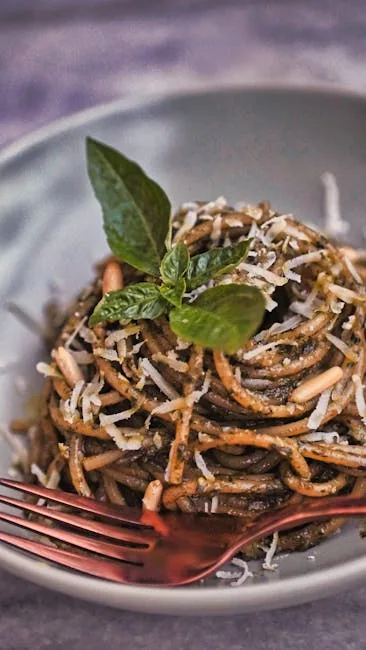
“This spaghetti brings a vibrant sauce of fresh basil blended with olive oil heated in golden garlic, grated parmesan cheese, and cooking water. An aromatic and refreshing recipe that values the simplicity of fresh herbs.”
What you need to know
- The olive oil quickly flavored with garlic and blended with fresh basil creates a fragrant and homogeneous green sauce.
- The starchy water from cooking the pasta emulsifies the fat of the olive oil with the parmesan cheese without curdling.
- Cooking the spaghetti al dente allows the porous surface to absorb the herbaceous sauce with ease.
Ingredients
Main
- 400g of spaghetti
- 1 cup fresh basil leaves
- 1/2 cup of olive oil
- 2 cloves garlic, minced
- Salt to taste
- Black pepper to taste
- Grated parmesan cheese to taste
Instructions
Principal
- In a large pot, boil salted water and cook the spaghetti according to the package instructions until al dente.
- Meanwhile, in a skillet, heat the olive oil over medium heat and add the minced garlic. Saute until lightly golden.
- In the blender, place the basil leaves, the hot garlic-infused olive oil, and a little salt and black pepper. Beat until a homogeneous sauce forms.
- When the spaghetti is cooked, drain and set aside, keeping a little of the cooking water.
- Add the spaghetti to the skillet with the sauce and mix well, adding a tablespoon of the cooking water if necessary to make it creamier.
- Finish with grated parmesan cheese to taste and decorate with more fresh basil leaves.
Chef's tips
- Wash and dry the basil leaves very well on paper towels so that residual water does not oxidize the green sauce.
- Do not beat the basil excessively in the blender so that the friction of the blade does not heat and darken the leaves.
- Add the grated Parmesan cheese with the heat already turned off so it melts smoothly into the creaminess of the pasta.
Variations
- Add 1/3 cup of toasted nuts or pine nuts to the blender to compose a classic Genoese pesto.
- Mix cherry tomatoes cut in half and sautéed quickly in the skillet to add color and sweetness to the dish.
- Add fresh buffalo mozzarella cheese cubes over the hot pasta just before serving.
Substitutions
- Traditional spaghetti can be replaced by bavette, fettuccine, or penne rigate.
- Parmesan cheese can be replaced by finely grated Pecorino cheese or artisanal semi-cured cheese.
- Common extra virgin olive oil can be swapped for Brazil nut-infused olive oil.
How to store
Store leftovers in the refrigerator in a well-sealed glass jar for up to 2 days. To reheat, place in a skillet over low heat with 2 tablespoons of olive oil and 2 tablespoons of water, avoiding boiling so as not to lose the basil aroma.
Can it be frozen?
Freeze only the blended basil and olive oil sauce in covered ice cube trays for up to 60 days in the freezer. The cooked dough should not be frozen with the fresh sauce; cook the fresh spaghetti when ready to use the cubes.
What to serve with
Serve hot accompanied by extra parmesan cheese at the table, toasted sliced ciabatta bread, and caprese salad with olive oil. It pairs perfectly with a young Sauvignon Blanc or chilled brut sparkling wine.
Frequently asked questions
Should the sauce be cooked in the skillet after blending?
No; just toss the raw blended sauce into the freshly drained pasta in the skillet off the heat to preserve freshness.
How to prevent basil sauce from turning dark and oxidizing?
Blend the basil with the already warm olive oil quickly and add an ice cube or very cold water to fix the green color.
Why reserve the pasta cooking water?
The starch dispersed in the water acts as a natural binder between the olive oil and the grated cheese, creating fluid creaminess.
Can I use dried dehydrated basil in this recipe?
Not recommended; dried basil completely loses the volatile essential oils and the fresh texture of the dish.
You might also like