- Prep
- 20 min
- Cook
- 30 min
- Total time
- 50 min
- Yield
- 4 servings
- Difficulty
- EASY
- Calories
- 690 kcal
Quick summary
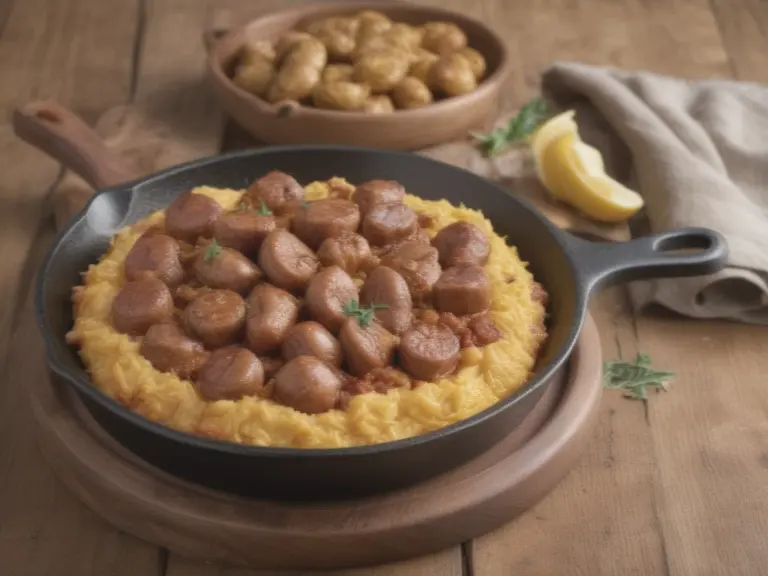
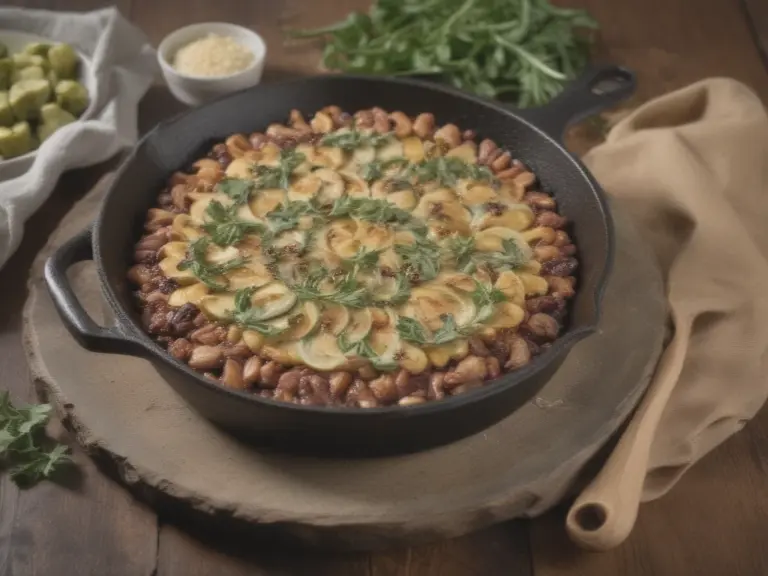
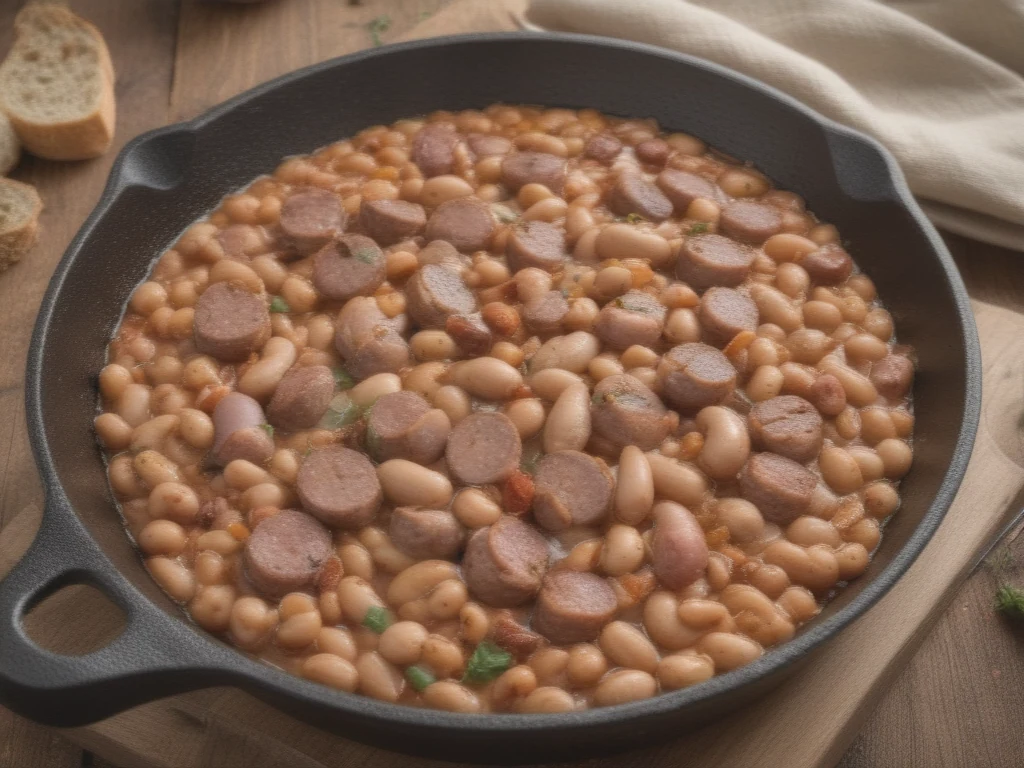
“Beans with Tuscan sausage unite soft carioca beans with slices of sausage sautéed with golden onion, garlic, and bay leaf in a thick broth. It is worth making for the quick preparation in the pressure cooker and the generous yield that sustains daily meals.”
What you need to know
- Remolho prévio de 500g de feijão carioca por 4 horas para reduzir fitatos e acelerar o cozimento na pressão
- Douramento das rodelas de linguiça toscana no óleo com cebola picada e alho antes da adição dos grãos e da água
- Cozimento por 25 minutos após pegar pressão com descompressão natural e apuração do caldo em fogo baixo
Ingredients
Main
- 500 g of carioca beans
- 300 g of Tuscan sausage
- 1 chopped onion
- 2 cloves garlic, minced
- 1 bay leaf
- Salt and black pepper to taste
- 2 tablespoons oil
- Enough water for cooking
Instructions
Principal
- Soak the beans for at least 4 hours before cooking.
- Drain and set the beans aside.
- In a pressure cooker, heat the oil and fry the onion until golden.
- Add the garlic and the Tuscan sausage cut into slices, and fry until golden.
- Place the beans in the pot, add the bay leaf, and cover with water.
- Season with salt and black pepper to taste.
- Cover the pan and cook for about 25 minutes after reaching pressure.
- Turn off the heat and let the pressure release naturally.
- Check if the beans are soft, otherwise, return to the heat for a few more minutes.
Chef's tips
- Fure as rodelas de linguiça toscana e doure bem na panela antes de colocar a água para soltar o fundo caramelizado
- Amasse duas conchas de feijão cozido com as costas da colher contra a lateral da panela para engrossar o caldo
- Ajuste o sal somente ao final do cozimento, pois a linguiça toscana já libera sódio natural durante a fervura
Variations
- Feijão tropeiro toscano escorrendo os grãos cozidos e misturando com farinha de mandioca torrada, couve e ovos mexidos
- Versão com legumes adicionando cubos de abóbora cabotiá ou cenoura nos últimos 10 minutos de fervura sem pressão
- Feijão toscano picante incorporando meia colher de café de pimenta-calabresa seca ou pimenta-de-cheiro picadinha
Substitutions
- O feijão carioca pode ser substituído por feijão preto, feijão fradinho, feijão rajado ou feijão vermelho
- A linguiça toscana pode ser substituída por linguiça calabresa defumada, paio em rodelas ou linguiça de frango
- O óleo vegetal pode ser substituído por banha de porco caseira ou azeite de oliva para refogar a cebola e o alho
How to store
Store the beans with sausage in a closed glass or plastic container in the refrigerator for up to 4 days. When reheating in the pot, add half a cup of filtered water to restore the consistency of the broth that thickens naturally under refrigeration.
Can it be frozen?
Freezes perfectly for up to 90 days in plastic freezer containers, leaving a finger's width of headspace for expansion. To defrost, move to the refrigerator the day before or place the frozen block with a splash of water in a covered pan.
What to serve with
Serve accompanied by well-fluffed white rice, finely sliced collard greens sautéed in garlic, and crunchy corn or cassava farofa. A fresh orange wedge and homemade hot sauce complete the quintessential Brazilian meal.
Frequently asked questions
Do I need to remove the skin from the Tuscan sausage before cutting?
It is not mandatory, but removing the membrane makes it easier to cut into clean slices and allows the meat to brown with more contact in the pan.
How to thicken the bean broth if it gets thin?
Remove a ladleful of the cooked beans, mash it well on a plate with a fork to form a paste, and return it to the pot, boiling uncovered for 5 minutes.
Why soak the beans for 4 hours?
Soaking hydrates the grains, reduces cooking time by about 30%, and eliminates oligosaccharides that cause digestive discomfort and gas.
Should the bay leaf be removed after cooking?
Yes, discard the bay leaf before serving to prevent someone from accidentally chewing the fibrous seasoning in the dish.