- Prep
- 20 min
- Cook
- 30 min
- Total time
- 50 min
- Yield
- 4 servings
- Difficulty
- EASY
- Calories
- 500 kcal
Quick summary
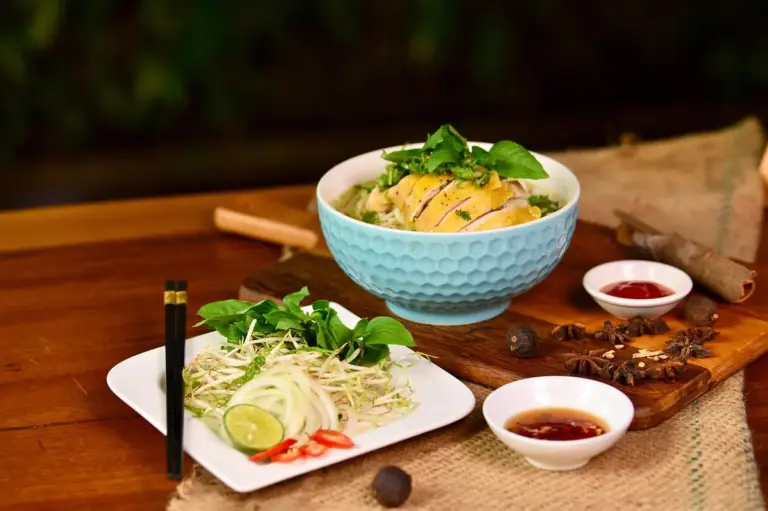
“Traditional Vietnamese soup based on translucent chicken broth cooked with fresh ginger, onion, and fish sauce. Served over rice noodles and finished with crunchy bean sprouts, aromatic herbs, and lemon drops.”
What you need to know
- Slow cooking for an hour extracts the collagen and essential oils from the chicken, ginger, and onion for the broth.
- The step of straining the broth is indispensable to obtain the crystalline transparency that defines a good pho broth.
- Fish sauce provides the salty umami base needed to harmonize with the acidity of the lemon and the freshness of the herbs.
Ingredients
Main
- 200g of rice noodles
- 1kg of chicken breast
- 1 large onion cut in half
- 2 slices of fresh ginger
- 3 liters of water
- 1 tablespoon of fish sauce
- Fresh herbs (cilantro and Thai basil)
- Bean sprouts to taste
- Lemon slices to taste
Instructions
Principal
- In a large pot, place the 3 liters of water and add the chicken breast, onion, and ginger.
- Bring to high heat and let it boil. Then, reduce to medium heat and cook for about 1 hour.
- After cooking, remove the chicken and shred. Reserve the broth.
- Strain the broth and return to the pot, adding the fish sauce.
- Meanwhile, cook the rice noodles according to the package instructions and set aside.
- On a plate, place the pasta, the shredded chicken, and pour the hot broth over it.
- Finish with fresh herbs, bean sprouts, and lemon slices.
- Sirva imediatamente e aproveite!
Chef's tips
- Toast the onion and ginger on a griddle before boiling to give an amber tone and slightly smoky notes to the broth.
- Rinse the rice noodles in cold water right after cooking to stop softening and prevent sticking.
- Serve the broth piping hot in the bowl so the heat activates the oils of the cilantro and basil at the moment of eating.
Variations
- Add one unit of star anise and a cinnamon stick during the boiling of the broth to create the classic spice profile.
- Slice fresh red peppers like dedo-de-moça to garnish the soup at the table, bringing sharp spiciness.
- Incorporate sliced mushrooms into the broth in the final 10 minutes of cooking to add more texture.
Substitutions
- The chicken breast can be replaced with boneless thighs or whole thighs to provide a denser broth.
- Thai basil can be swapped for common basil mixed with a few mint leaves.
- Fish sauce can be replaced with light soy sauce with drops of lemon if you cannot find the Asian condiment.
How to store
Keep the broth and shredded chicken in closed containers in the refrigerator for up to 4 days. The pasta should be cooked at the time of consumption so it doesn't fall apart in the stored liquid.
Can it be frozen?
Pure broth freezes easily for up to 3 months in airtight plastic containers. Do not freeze the soup already assembled with the pasta and fresh sprouts, as they will lose their characteristic texture.
What to serve with
Arrange small plates on the table with lemon wedges, additional bean sprouts, fresh cilantro sprigs, and sriracha chili sauce so that each diner can season to their liking.
Frequently asked questions
What exactly is the fish sauce mentioned in the recipe?
It is a traditional fermented liquid condiment from Southeast Asian cuisine, salty and rich in umami flavor, known as nam pla or nuoc mam.
Can I replace rice noodles with traditional wheat noodles?
Not recommended, as the light and neutral texture of the rice dough is fundamental so as not to overload the delicacy of the Asian broth.
Does bean sprout need to be cooked before serving?
No, bean sprouts (moyashi) are placed raw in the bowl so that the boiling broth softens them slightly while maintaining their crunchy texture.
How to remove excess fat from the surface of the broth?
Pass a ladle close to the surface of the boiling broth or let the broth cool in the refrigerator to remove the solidified fat layer.
You might also like